01 · Model
Drawn and calculated first
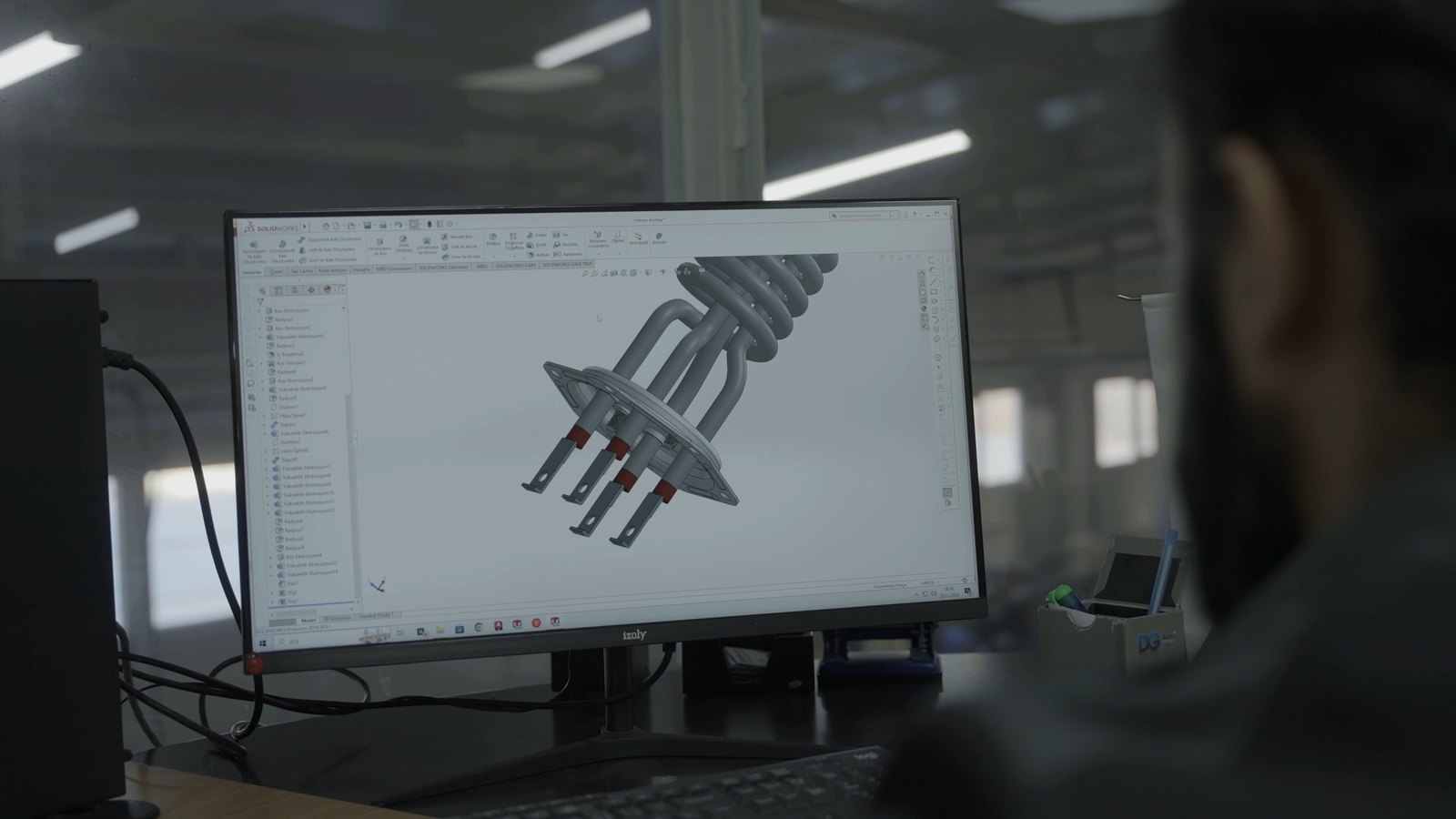
Your part is redrawn and, where useful, modelled in 3D – developed length, cold zones and surface load fixed first.


Since 1959
Tel. +90 312 814 51 20
WhatsApp +90 533 619 95 45
Email: t@tormec.com.tr
BALÇIK Isı Elemanları Sanayi Ticaret A.Ş.
Fatih Mh. Turgut Özal Blv. No:50
Kahramankazan 06980 Ankara Türkiye
Customised production · to your drawing
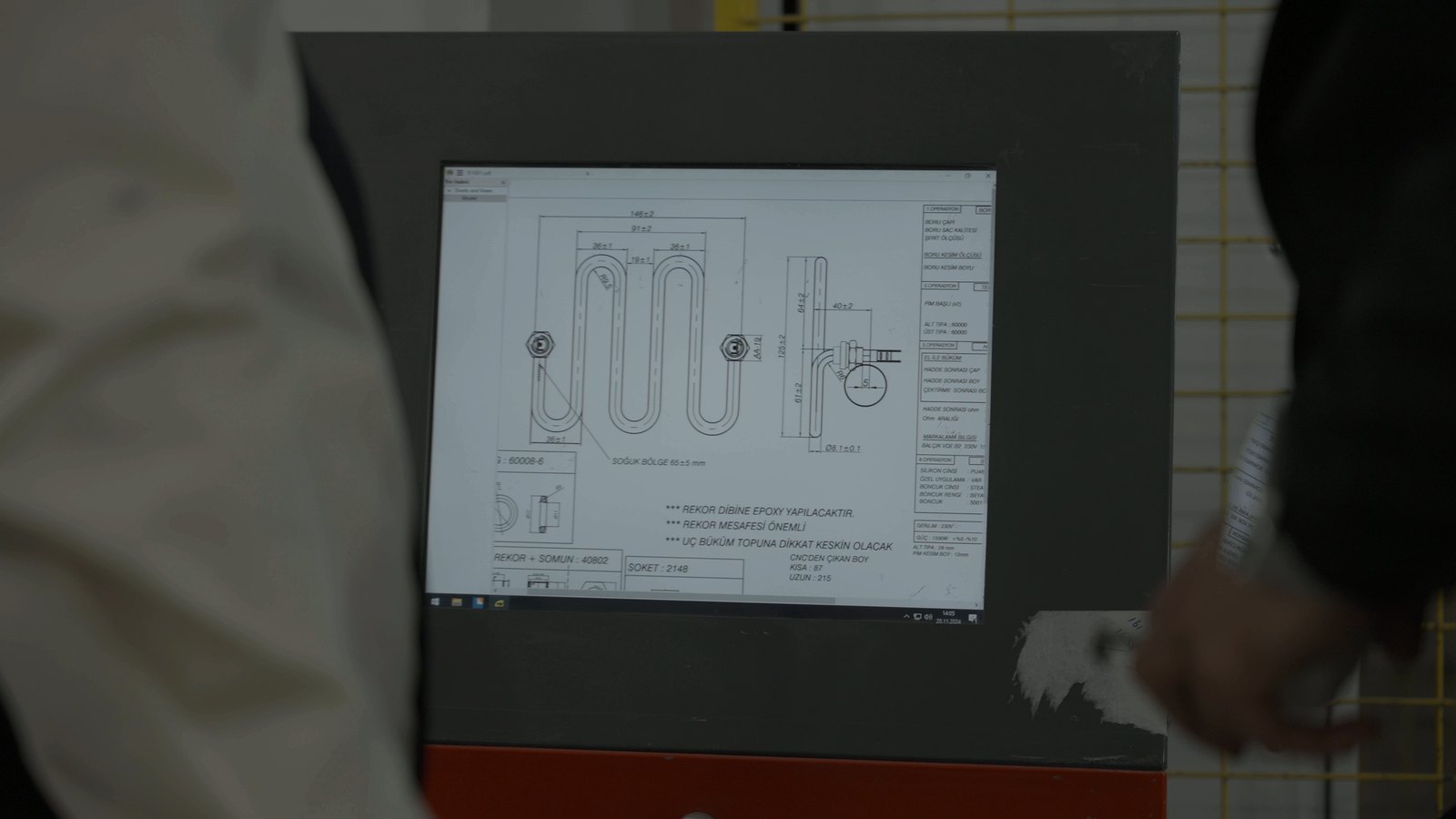
Most elements we ship are engineered to a customer specification. Send a drawing, a sample or only the installation space and the duty – we design, form and test the element on the lines that make our series parts.
Special does not mean improvised. A custom element is calculated, drawn, sampled and approved before it is produced – with the same 100 % electrical test and lot traceability as a series part.
 Drawing to part
What is possible
These ranges span all our product groups today; designs outside them are reviewed per application. Values per product group are on the Specifications page.
| Parameter | Range | Note |
|---|---|---|
| Sheath diameter | 6.0 – 16 mm | Standard 6.5, 8.0, 8.5, 10, 12, 13.5 and 16 mm; finned elements with approx. 24 – 36 mm fin outer diameter (rectangular plate fins on request) |
| Sheath material | AISI 304, 316L, 321; Incoloy® 800 and 825; copper; nickel-diffusion coated stainless | Copper tinned or nickel-plated; titanium on request for water heating; fins in aluminium, galvanised or stainless steel |
| Power | 100 W – 6 kW per element as standard (higher on request) | Multi-element and three-phase assemblies up to 60 kW |
| Rated voltage | 100 – 480 V, single or three phase | Star or delta connection; 12 – 48 V low-voltage defrost variants on request |
| Watt density | 1 – 25 W/cm² on the heated sheath | Set by the medium: defrost 1 – 3, radiant oven 5 – 8, instantaneous water heaters 12 – 25 W/cm² |
| Forms | Straight rods, hairpins, U, W and M serpentines, loops, rings, flat spirals, coils, finned and three-dimensional forms | CNC bending, fixture bending or hand forming on templates |
| Mounting | Welded brackets and frames; round flanges Ø 48 – Ø 180 mm; threaded nipples G ½″ – G 2″ (BSPP, ISO 228-1) or NPT; shaped rubber flanges with clamp bolt | Brazed or welded in our plant; thermostat pocket tubes on request |
| Terminals | 4.8 and 6.3 mm flat tabs, M4 – M6 studs, ceramic terminal sockets, lead wires, cable with plug, terminal boxes IP54 / IP65 | Connector family and orientation to suit your harness |
| Terminal sealing | Silicone or epoxy resin, PTFE bead, ceramic bead with cement, STF seal | Chosen for the temperature and humidity at the terminal end |
| Built-in devices | Thermofuse (single or double thermal fuse), NTC and PT100 sensors, BALÇIK TORMEC stem thermostats, earth tabs | Trip temperature, sensor type and connector stated on the drawing |
| Packaging | Bulk cartons, trays, customer-specific packaging and labels | Part number, lot, quantity and barcode to your specification |
Ranges reflect BALÇIK TORMEC series production as of 2026. The right watt density depends on the medium, flow and allowed sheath temperature; the final value is validated in our laboratory.
Special shapes
A special element is drawn and calculated before any tube is cut. Complex forms and small lots are shaped by hand on templates; repeat geometries move to fixtures and CNC bending.
01 · Model
Your part is redrawn and, where useful, modelled in 3D – developed length, cold zones and surface load fixed first.
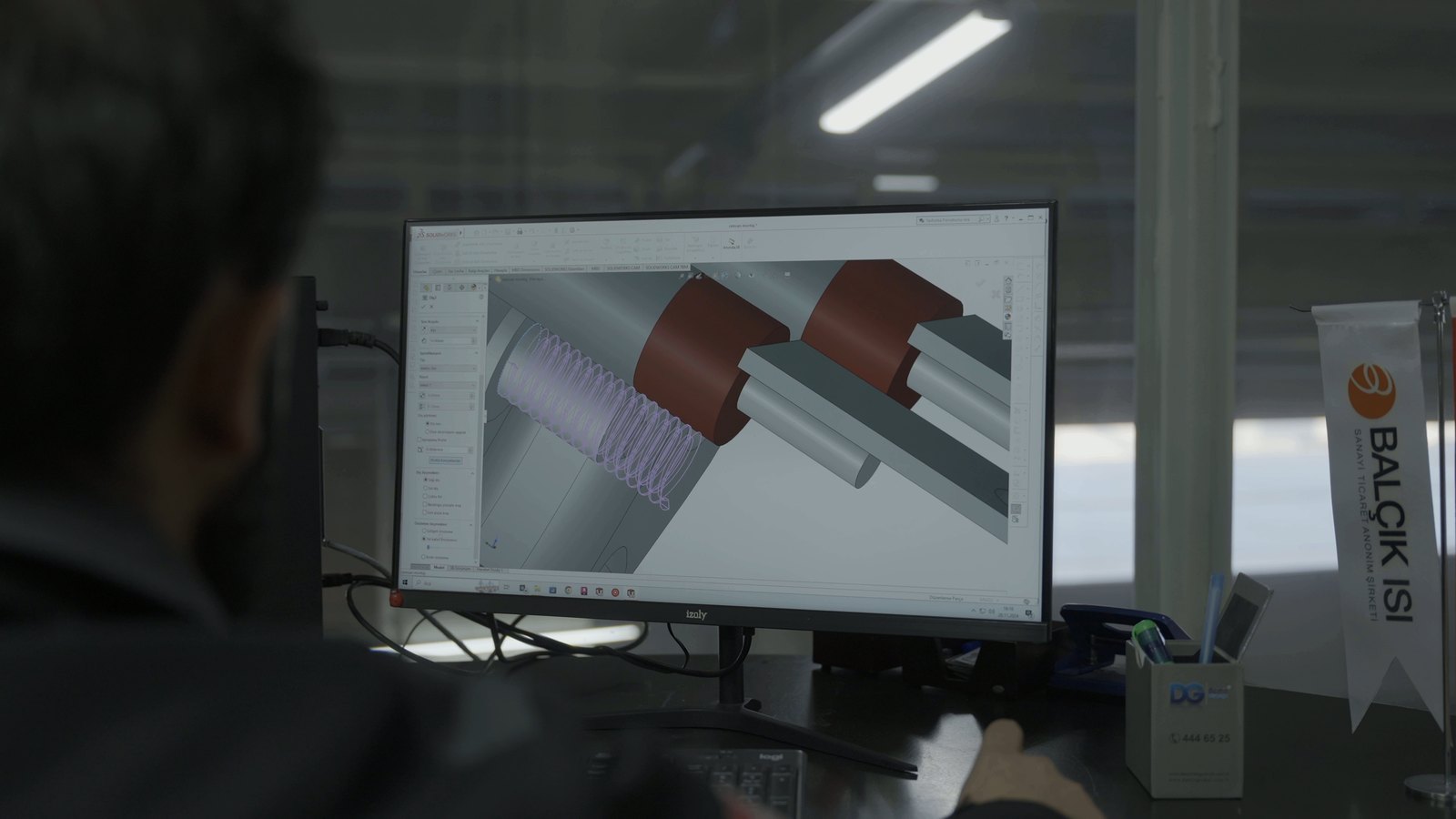
02 · Check
On request the 3D model goes to your designers, who check clearances and mounting points before samples are made.
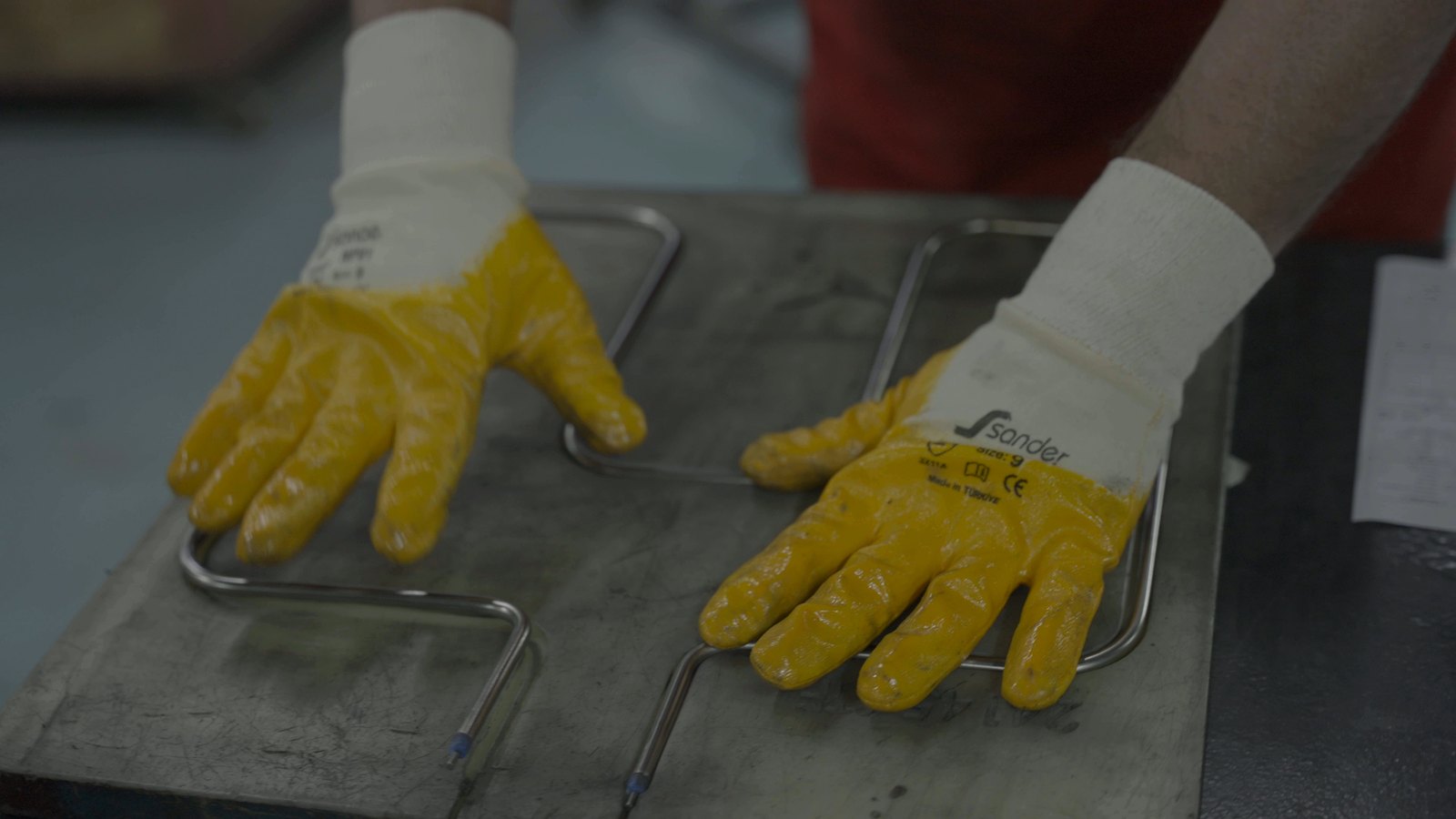
03 · Hand forming
Three-dimensional prototypes and small lots are formed on templates that fix every bend.
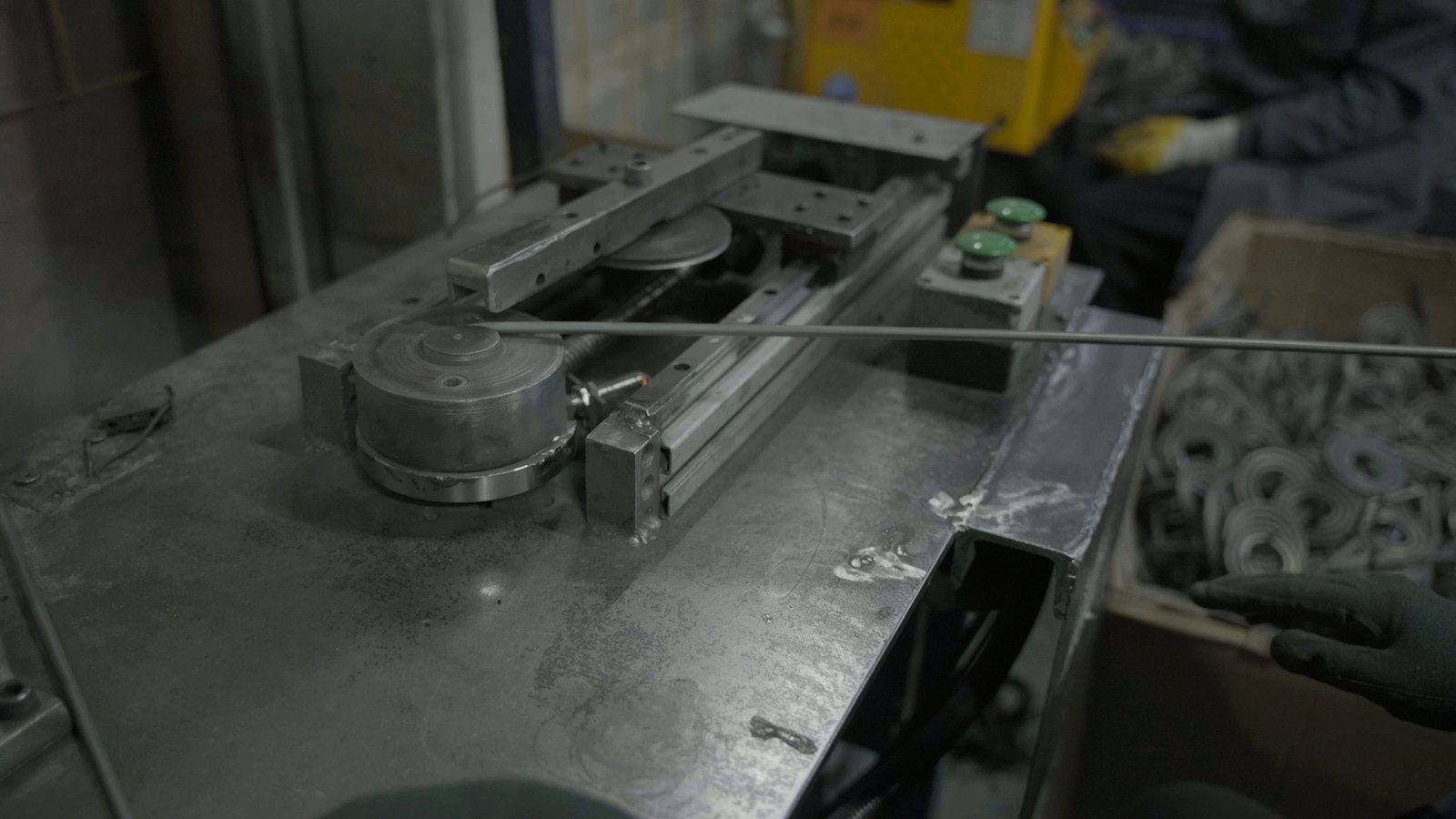
04 · Template
The template fixes bend positions and angles, so each piece of a small lot repeats the geometry of the approved sample.
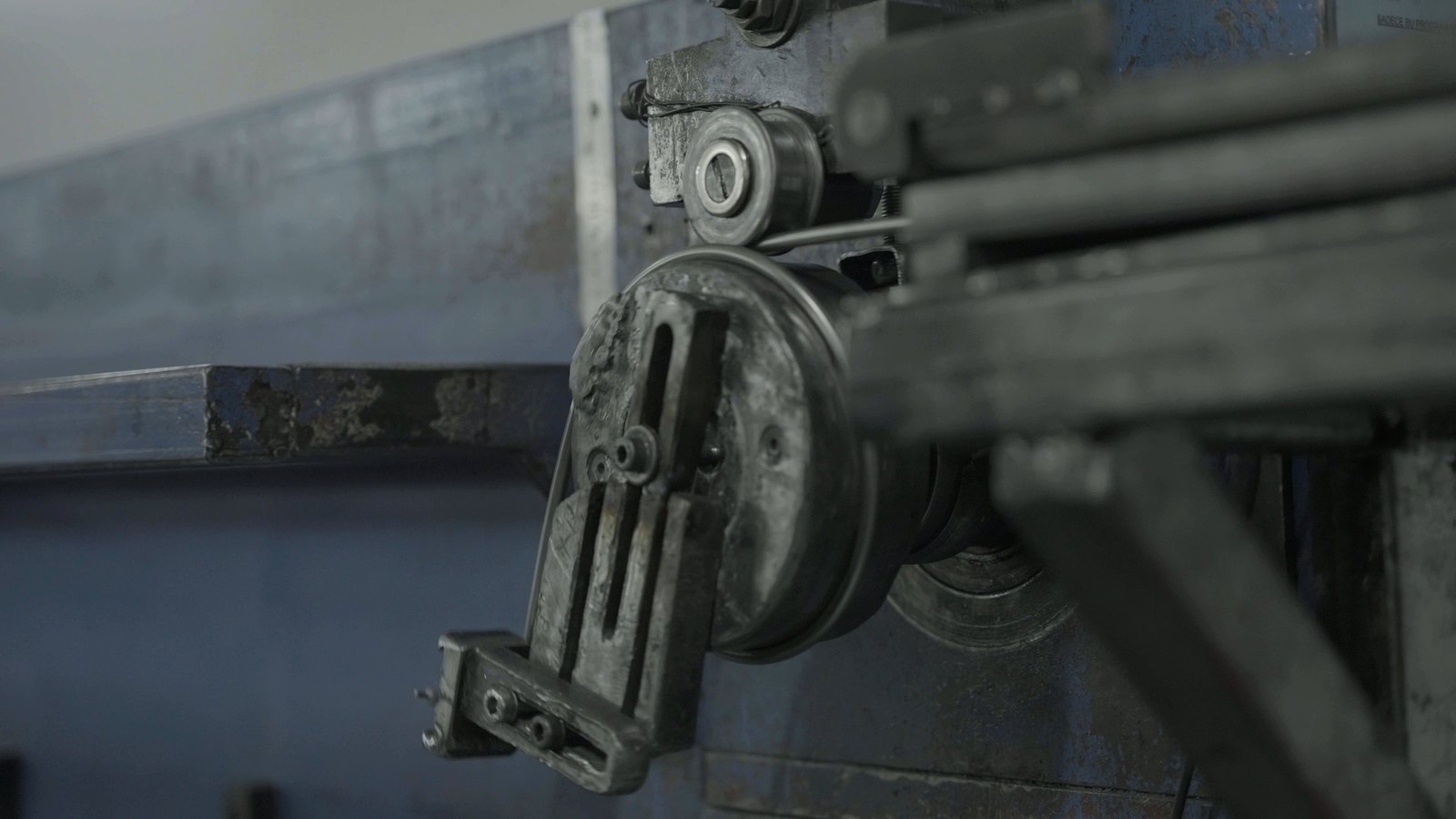
05 · Fixture
Recurring bends and tight radii are formed in fixtures – faster than hand forming and with less variation.
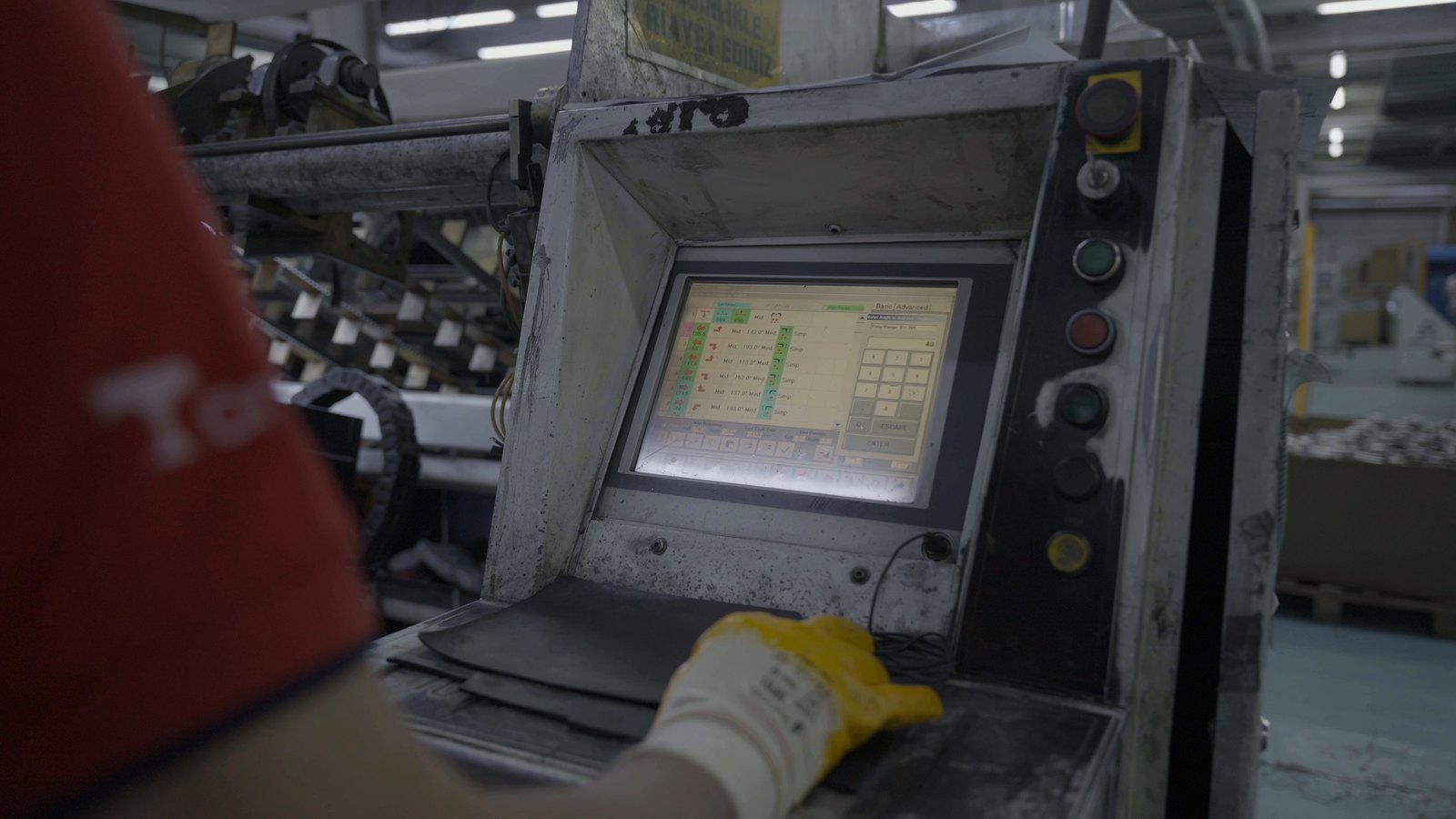
06 · Scale up
When volumes grow, the geometry moves to fixtures and CNC bending – the approved drawing and the test plan stay the same.
Small series
Prototypes, pilot lots and small series run on the machines, materials and test plan of our series production. Batch size changes the price, not the standard.
How a special project runs
For a new development with your engineering team, the six-stage co-design process applies. For a special part to a given drawing, the route is shorter.
Drawing, sample or installation space with power, voltage, medium and annual volume.
Surface load, material, cold zones and fittings checked; changes proposed where they extend life.
Quotation with price breaks and a dimensioned drawing for your approval.
Typically 2–4 weeks after drawing approval, made on series processes and tested in our laboratory.
Small or large lots to the approved sample and the agreed control plan.
Plan your element
Send what you have. We confirm feasibility, propose material and form, and quote samples and series.
Engineered and made in Ankara · since 1959
Three generations of know-how, our own welded tube and brazing lines, an engineering team with its validation laboratory and a 100 % electrical test on every element – so the heat inside your product is the one thing you never have to worry about.
Custom tubular heating elements built to your drawing: 6.0–16 mm sheaths in stainless steel, Incoloy or copper, special forms and fittings, samples to series.
BALÇIK TORMEC designs and manufactures tubular heating elements in Kahramankazan, Ankara, since 1959 – series and custom production to your drawing, VDE-approved element families, ISO 9001:2015, exports to more than 60 countries.
Reception & switchboard
Human resources
Worldwide sales
Customers outside Türkiye – English, Russian, Arabic
Domestic sales – Türkiye
For customers in Türkiye · Türkçe
Purchasing & imports
Accounting
Quality
Production & planning
We use essential cookies to run the site and, with your consent, functional cookies for embedded maps and anonymous usage statistics (Google Analytics). No advertising or profiling cookies are used. See our Cookie Policy and KVKK / privacy notices.
Sitenin çalışması için zorunlu çerezleri; onayınızla gömülü harita için işlevsel çerezleri ve anonim kullanım istatistiklerini (Google Analytics) kullanıyoruz. Reklam veya profilleme çerezi kullanılmaz. Çerez Politikası ve KVKK aydınlatma metinleri.