Small home appliances

Small, fast, safe – and repeatable from the first piece to the millionth.

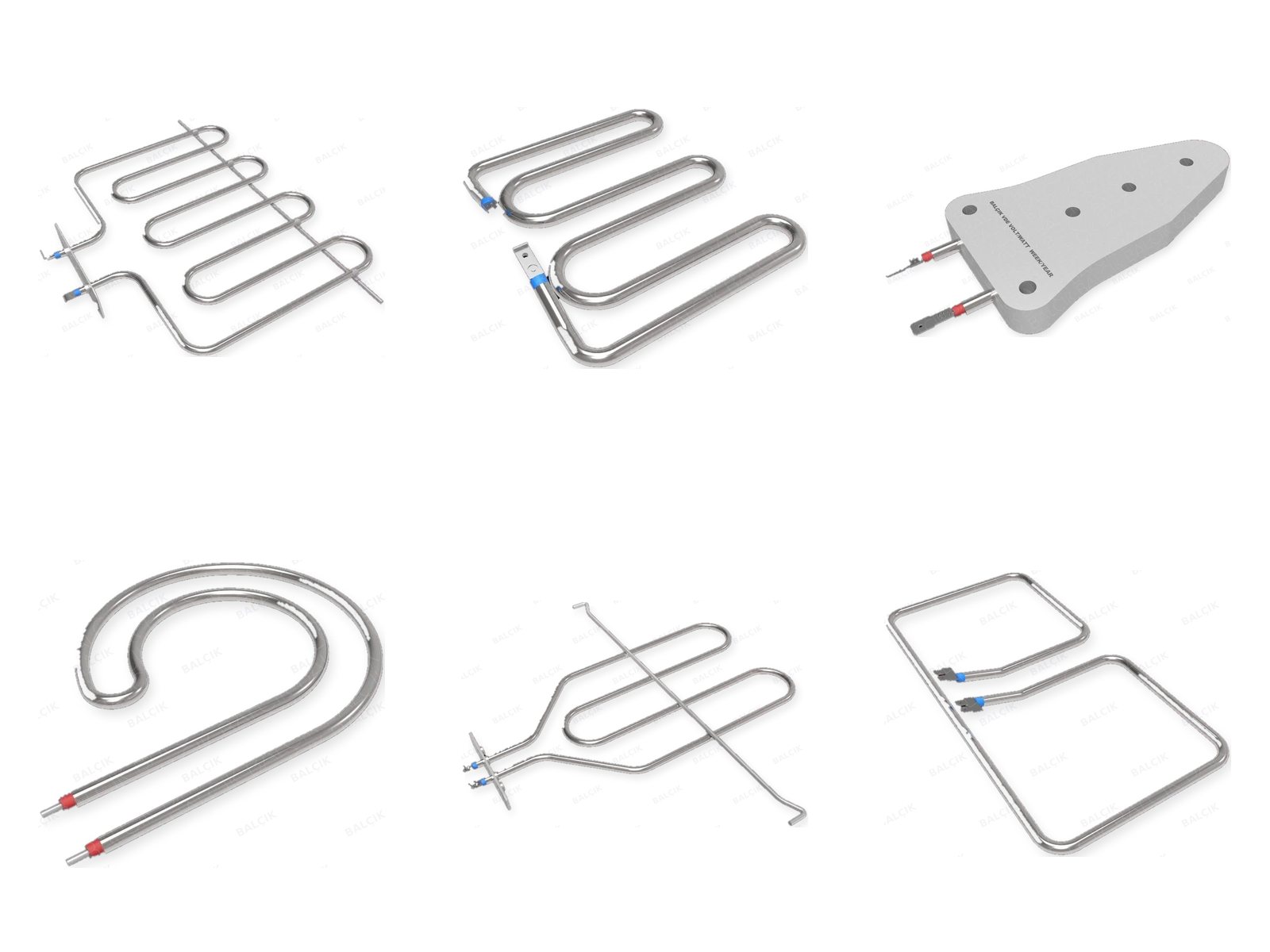
Elements for grills, contact grills, toasters, mini ovens, steam irons and kettles, and boiler elements for coffee machines. Small diameters in tight spaces, high volumes, and terminations chosen for automated assembly.

Small appliances leave no thermal margin to hide behind: wire temperature, MgO compaction and sheath alloy have to be right in every piece.

  • 6.5 mm tube as the standard wherever the application allows.
  • Terminations for your line: lead wires with crimped ends, 4.8 and 6.3 mm flat tabs or M4 studs.
  • Capability data on resistance and key dimensions from a trial lot, delivered with the initial samples.
Small home appliance heating elements: grill, toaster and steam-iron elements Small appliances · series

Applications · where they work

Grills, toasters, irons, kettles and coffee machines.

Compact elements for appliances that heat up in seconds and are built in very high volumes.

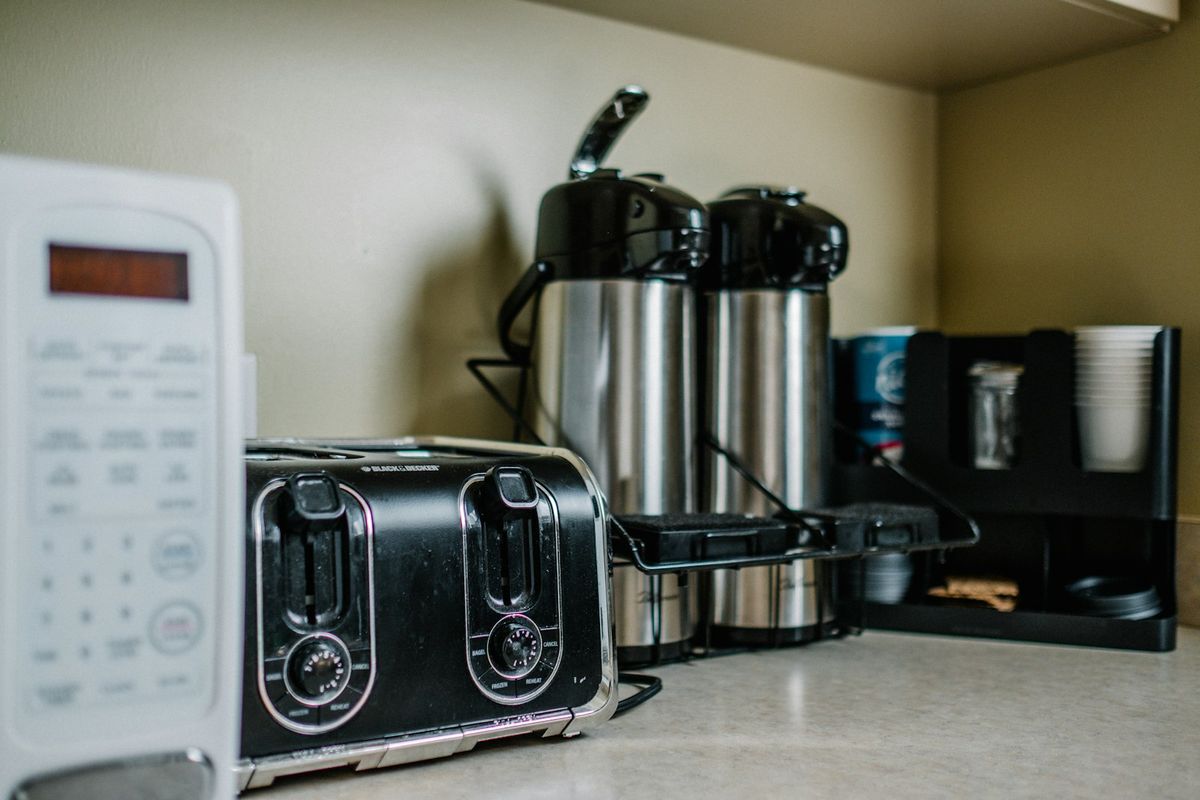
Toaster and hot-water urns on a counter
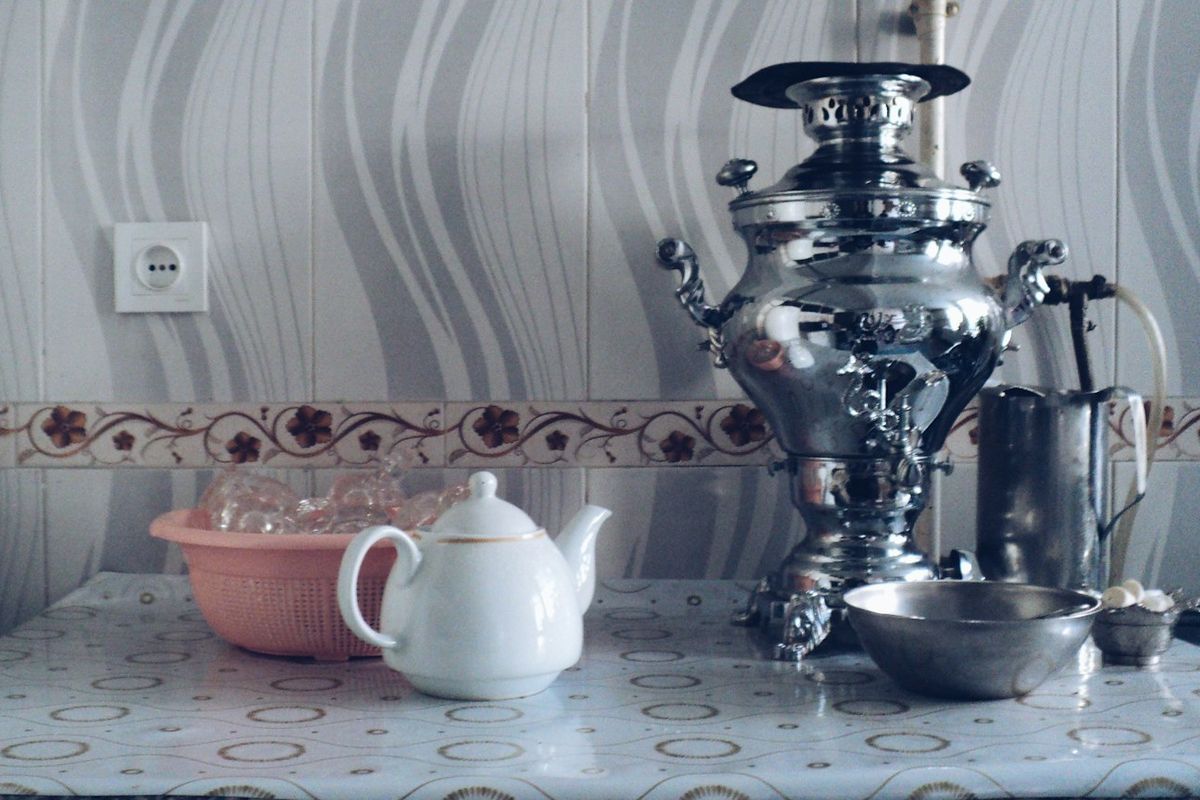
Samovar-type tea kettle

Key specifications

Specified for tight spaces: the small-appliance envelope in figures.

Typical values per element for radiant, cast-in, clamped and immersed designs. At these volumes, the tolerance band matters as much as the nominal value.

ParameterTypical values
Sheath diameter6.0 – 8.5 mm (6.5 mm most common); 10 mm for kettle and coffee-machine bases
Sheath materialsAISI 304, AISI 321 (radiant grills), Incoloy 800 (high-load radiant), copper (cast-in kettle bases)
Power range300 – 2600 W typical series (kettles 1800 – 2400 W, irons 1000 – 2600 W, grills 600 – 2200 W); other ratings to drawing
Voltage230 V; 120 V North America (UL recognition in progress – target end of 2027); 100 V Japan
Watt density on the heated sheath3 – 9 W/cm² cast-in or clamped to aluminium; 5 – 8 W/cm² radiant; 8 – 12 W/cm² immersed kettle elements
Terminal typesLead wires (silicone, PTFE or fibreglass insulated) with crimped ends; 4.8 and 6.3 mm flat tabs; M4 studs
Sealing optionsSilicone resin, PTFE bead, ceramic bead for radiant grills
Typical appliance standards & marksAppliance to EN 60335-2-9 (grills, toasters), 2-3 (irons), 2-15 (kettles and liquid heaters); VDE for approved element families; RoHS, REACH; CE marking of the finished appliance; food-contact declarations where the sheath touches water or food
Typical formsStraight and "U" elements for cast-in soleplates, flat spirals and loops for grills and toasters, disc-base kettle elements, boiler elements for coffee machines

Standards and marks are those the finished appliance typically has to meet. BALÇIK TORMEC’s own approvals are listed on the Certificates page; further marks are obtained per project. All values typical – final values confirmed by our engineers.

Typical forms

Five forms, three ways to deliver heat.

Radiant in open air, cast into or clamped to aluminium, or in contact with water – each path sets its own watt density on the heated sheath.

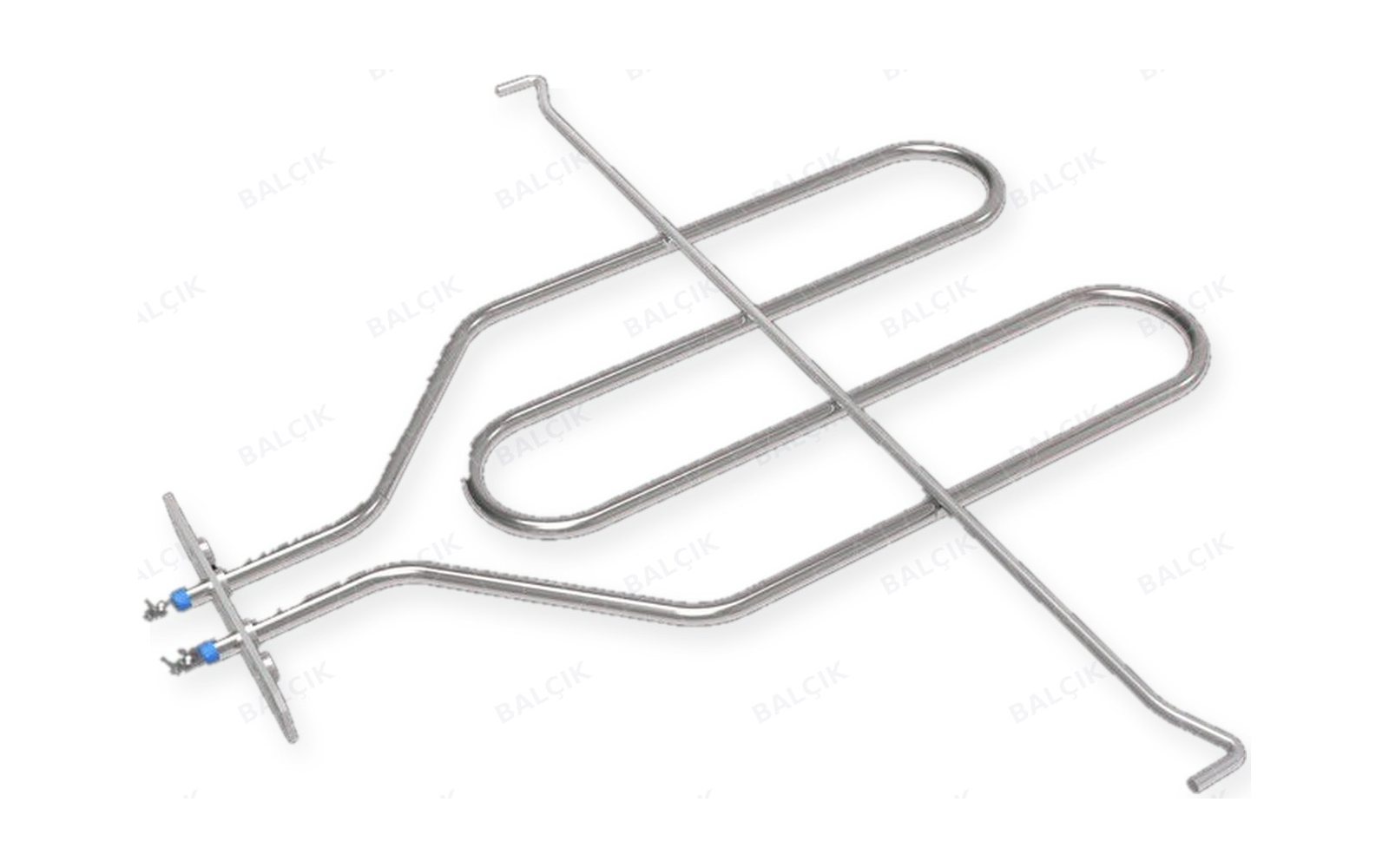
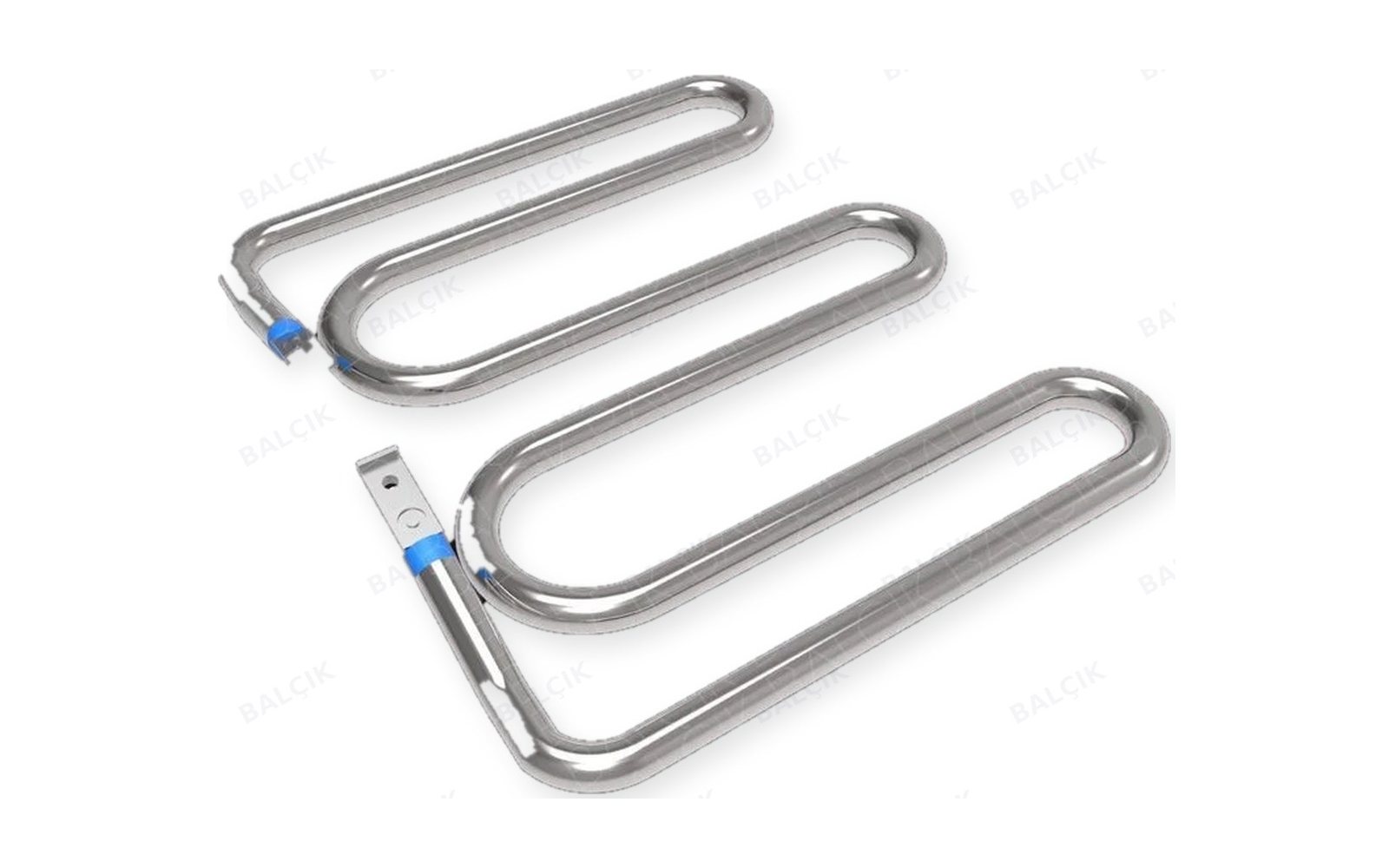
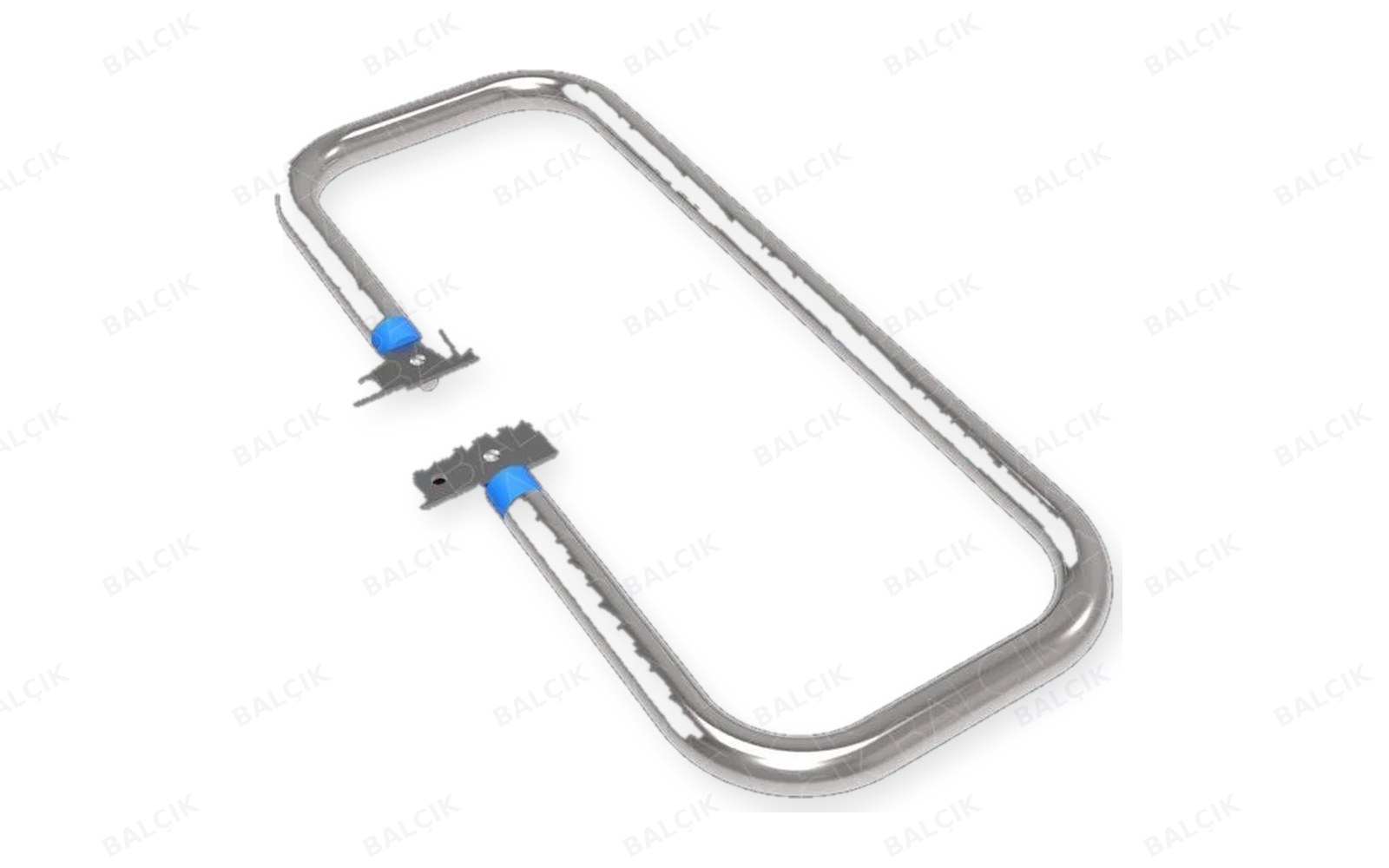
Radiant heating element for an electric grill

01 · Radiant

Grill and barbecue elements

Flat spirals and loops for grills and electric barbecues – radiant elements that run like oven elements at a smaller scale.

  • grills 600 – 2200 W
  • 5 – 8 W/cm² radiant
  • AISI 321 (radiant grills), Incoloy 800 (high-load radiant)
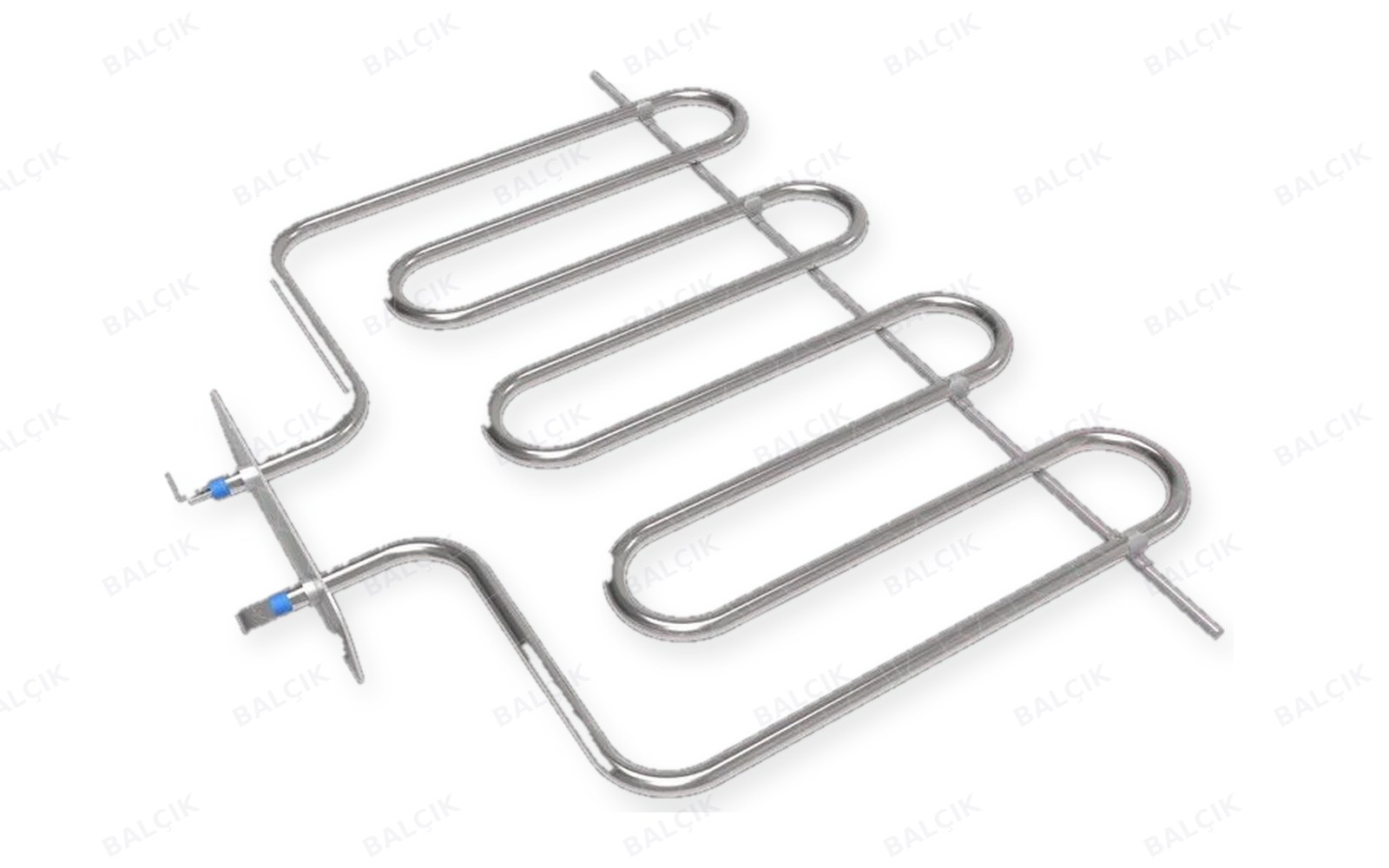
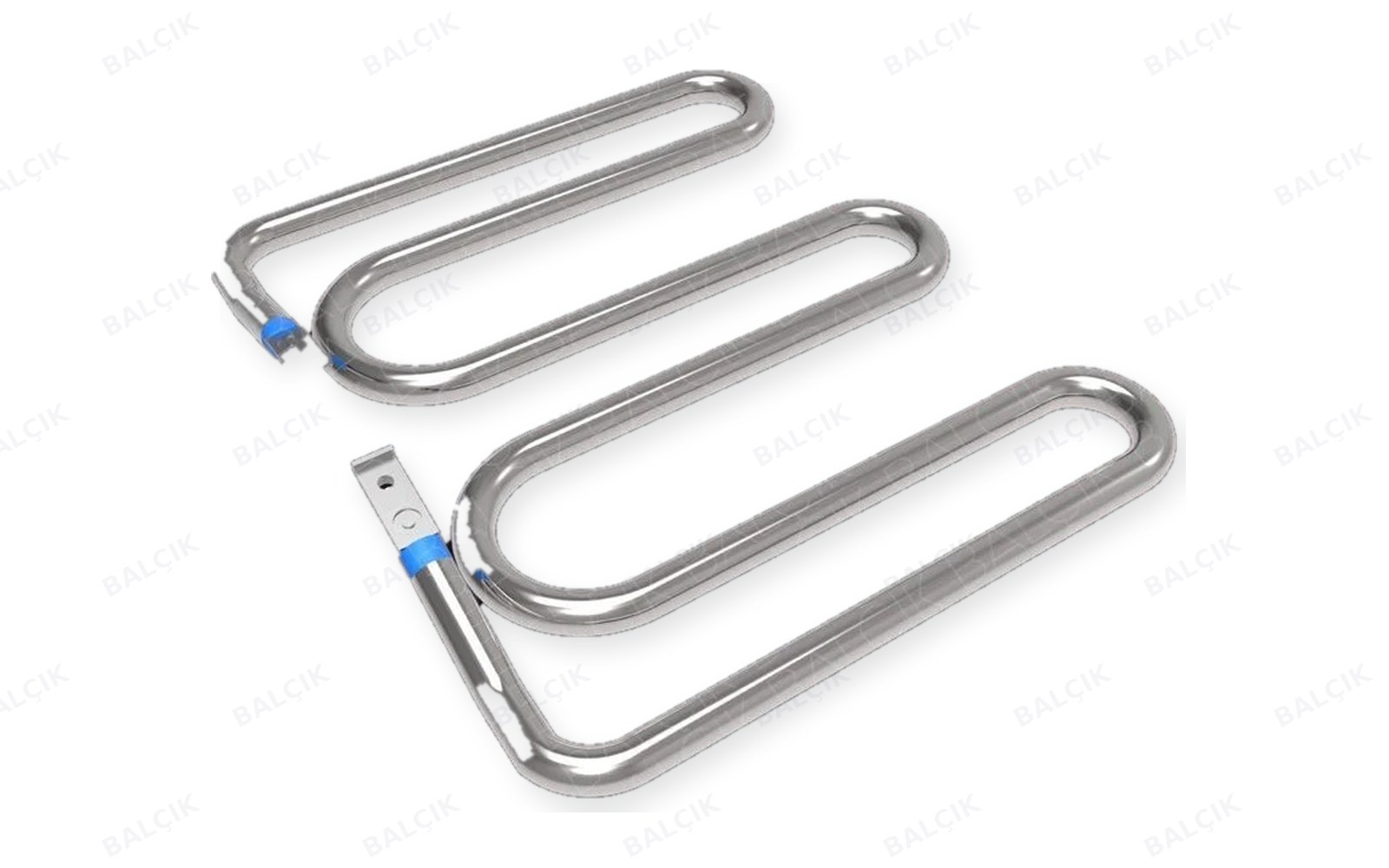
Heating element for a toaster

02 · Compact cavity

Toaster and mini-oven elements

Slim elements for toasters, toaster ovens and mini/midi ovens, with the watt distribution set for even browning.

  • Flat spirals and loops
  • 6.0 – 8.5 mm (6.5 mm most common)
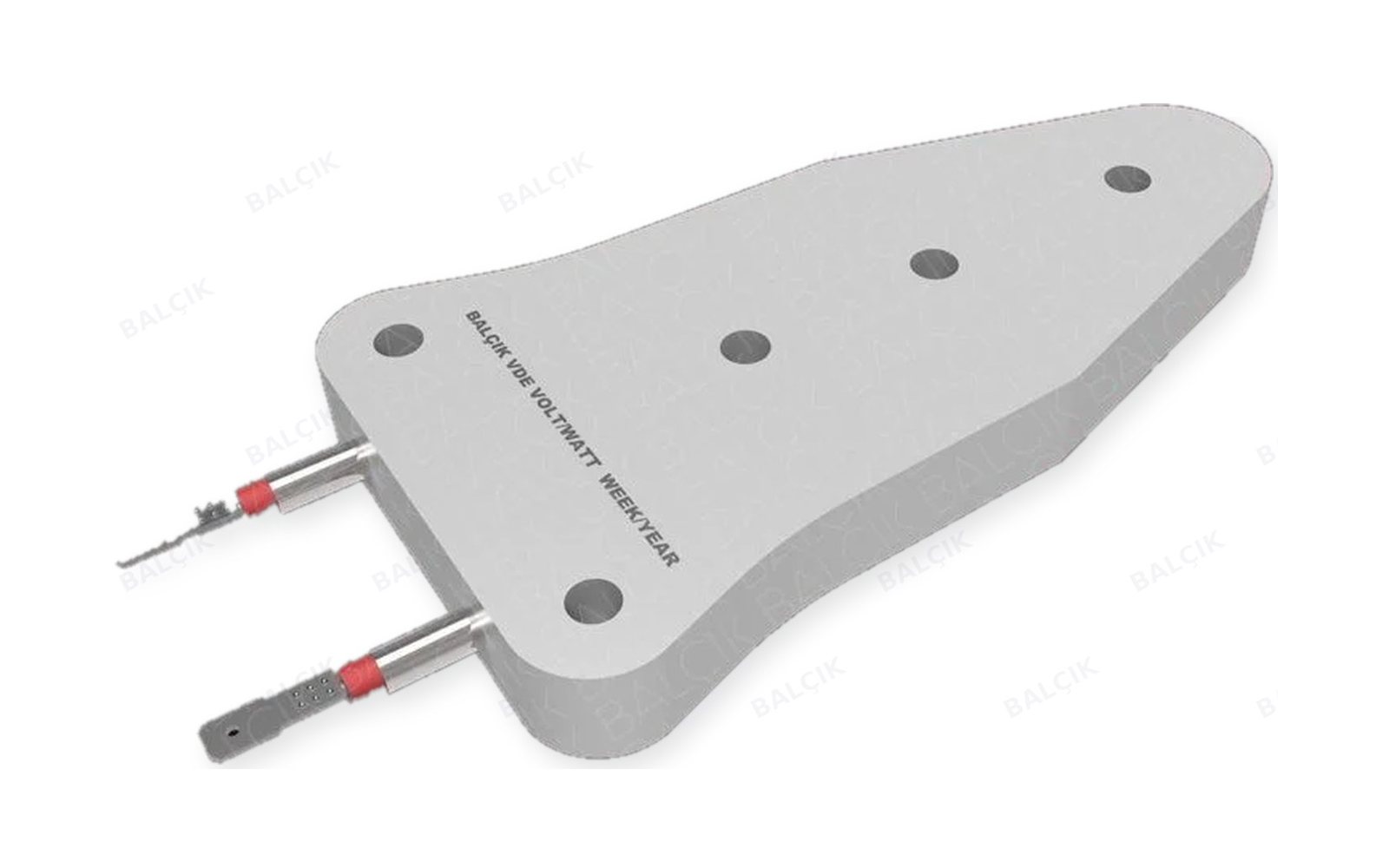
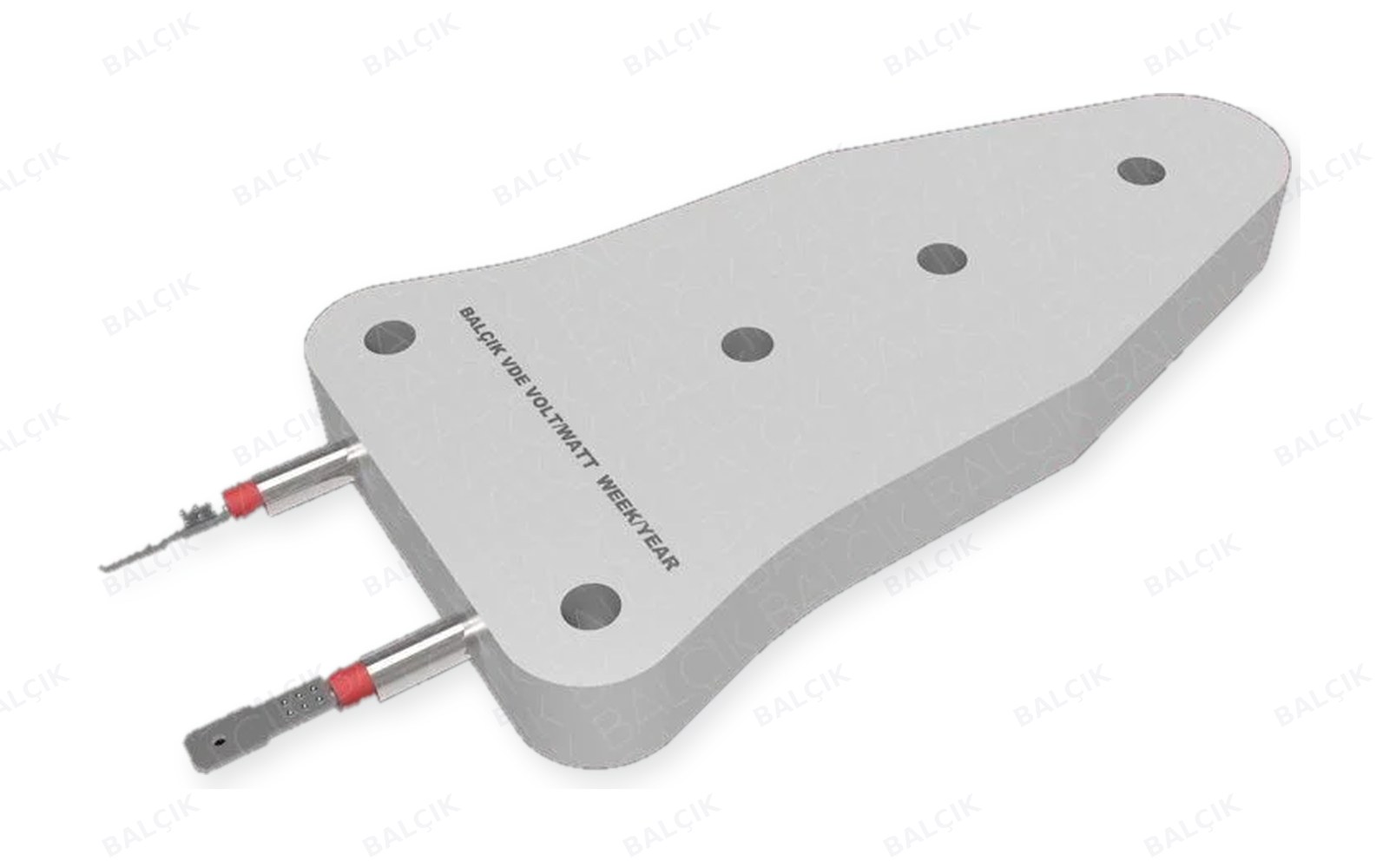
Heating element for a steam iron soleplate

03 · Cast-in

Cast-in soleplate elements

Straight and U elements die-cast into aluminium soleplates, so element and ironing surface form one part.

  • irons 1000 – 2600 W
  • 3 – 9 W/cm² cast-in or clamped to aluminium

Water in small appliances

Kettle elements

Disc-base and immersed kettle elements, with materials declared for water contact and the dry-run behaviour designed together with the appliance cut-out.

  • kettles 1800 – 2400 W
  • 8 – 12 W/cm² immersed kettle elements
  • copper (cast-in kettle bases)

Boiler elements for coffee machines

Boiler elements with a surface load chosen for repeated descaling, and materials declared for drinking-water contact.

  • Food-contact declarations where the sheath touches water or food
  • Appliance standard: EN 60335-2-15 (kettles and liquid heaters)

Technical drawing · cross-sections

Where the heat goes decides the surface load.

The same tube carries a different watt density on the heated sheath when it is cast into aluminium, clamped to a plate or left to radiate in open air.

Cast into aluminium Clamped to a plate Radiant in open air Sheath, MgO, coil Clamp bracket Die-cast soleplate Aluminium plate Flat loop, plan view 3 – 9 W/cm² cast-in or clamped to aluminium 5 – 8 W/cm² radiant
Cast-in and clamped elements in cross-section, a radiant grill loop in plan view. In elements cast into aluminium the aluminium spreads the heat and keeps the sheath cooler; bare radiant loops run like oven elements at a smaller scale.

Small diameter, high power

At 2400 W, a kettle brings a litre of cold water to the boil in about three minutes. At this load, wire temperature, MgO compaction and sheath alloy leave no room for variation from piece to piece.

Dry run and misuse

Kettles are switched on empty, irons left face down. EN 60335 abnormal-operation tests simulate exactly this – element and thermal cut-out together must fail safe: no fire, no accessible live parts, no breach of insulation.

Cast-in integration

For die-cast soleplates, tube surface, geometry and thermal expansion must suit the casting process. A bright, scale-free surface aids aluminium contact, and the joint has to survive thousands of heating cycles.

Terminations and appliance standards

Terminals aligned for automated welding and push-on assembly. Appliances are typically approved to EN 60335-2-9 (grills, toasters), 2-3 (irons) or 2-15 (kettles), with food-contact declarations where the sheath touches water or food.

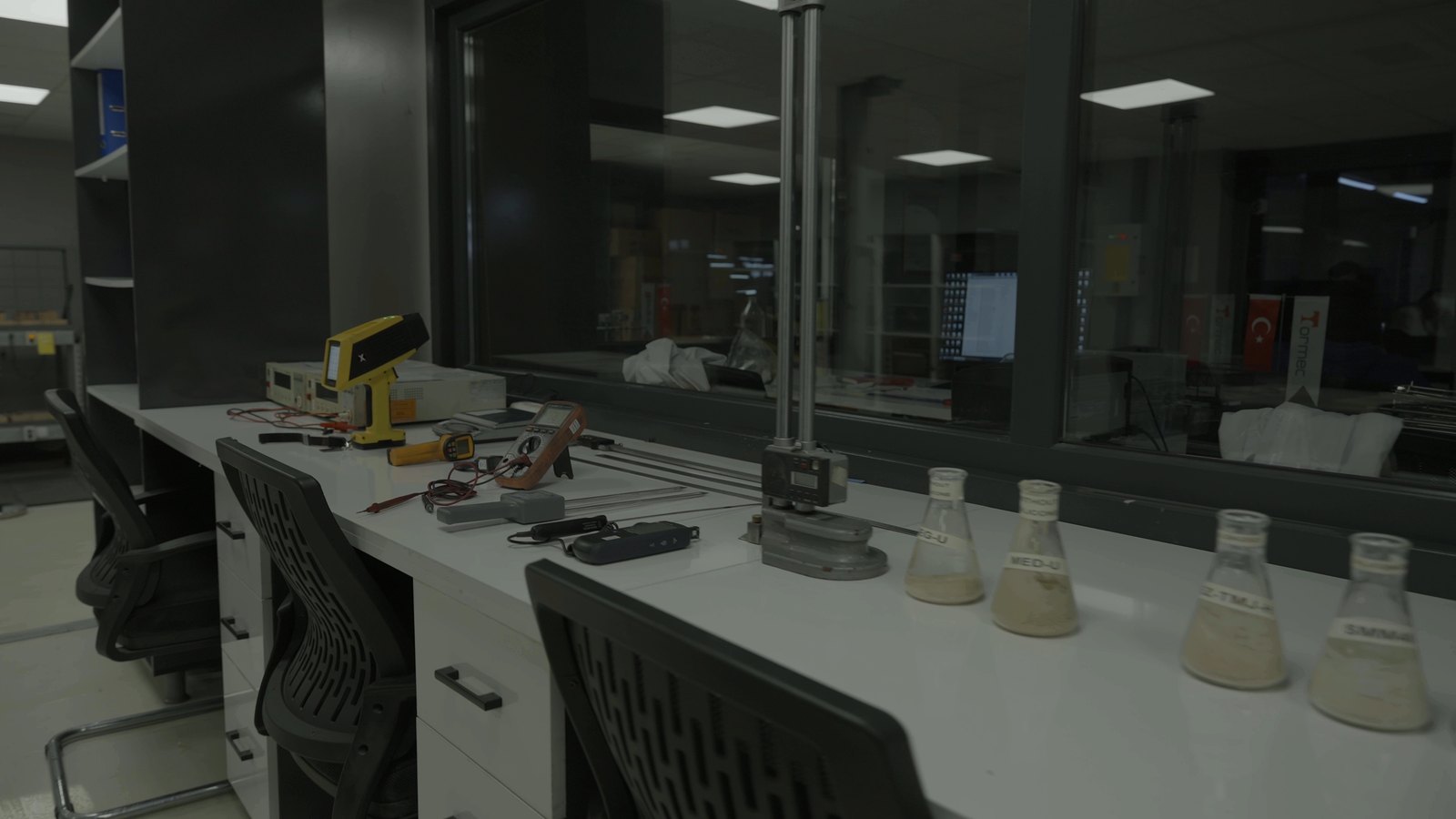
Laboratory bench in the BALÇIK TORMEC validation laboratory
Our validation laboratory in Kahramankazan.

Validation

Capability, not just conformity.

An automated line stops for variation in cold resistance, bend position or terminal alignment. We report capability over a trial lot with the initial samples – then test every series element 100 %.

The complete test programme: quality and validation laboratory.

  • Power and resistance, leakage current, dielectric strength and insulation resistance, hot and cold.
  • Life test at rated power and heating uniformity on radiant loops.
  • Dimensional inspection and flatness for cast-in and plate elements.
  • Mechanical shock and functional check on finished parts.
  • Capability studies on resistance and key dimensions over a trial lot.

Video · on YouTube

How our tubular heating elements are made.

A short film from our YouTube channel: BALÇIK TORMEC tubular heating elements from raw material to the 100 % tested series part – made in Kahramankazan since 1959.

BALÇIK TORMEC – Tubular Heating Elements since 1959 · YouTube

Online catalogue

47 small-appliance designs in our online catalogue.

Grill, toaster and steam-iron elements, each listed with sheath diameter, voltage and power. Start from the closest design for your appliance.

Running a high-volume assembly line?

Send the drawing and your connector family. We return a design with capability data from a trial lot – and a target price.

Engineered and made in Ankara · since 1959

Since 1959, we turn electricity into trust.

Three generations of know-how, our own welded tube and brazing lines, an engineering team with its validation laboratory and a 100 % electrical test on every element – so the heat inside your product is the one thing you never have to worry about.

TOP

BALÇIK TORMEC · Heating Elements for Small Home Appliance

Small home appliance heating elements for grills, toasters, mini ovens, steam irons and kettles, and boiler elements for coffee machines, made in Ankara.

BALÇIK TORMEC designs and manufactures tubular heating elements in Kahramankazan, Ankara, since 1959 – series and custom production to your drawing, VDE-approved element families, ISO 9001:2015, exports to more than 60 countries.

Products · related pages