

Technical master · 2026
Eight product groups. One reference for every value.
What a design engineer needs at the start of a project is the envelope of what is normal for the appliance class: which diameters, materials, power ranges, surface loads, terminals and fittings are in series production today, and which standards the appliance will typically have to meet.
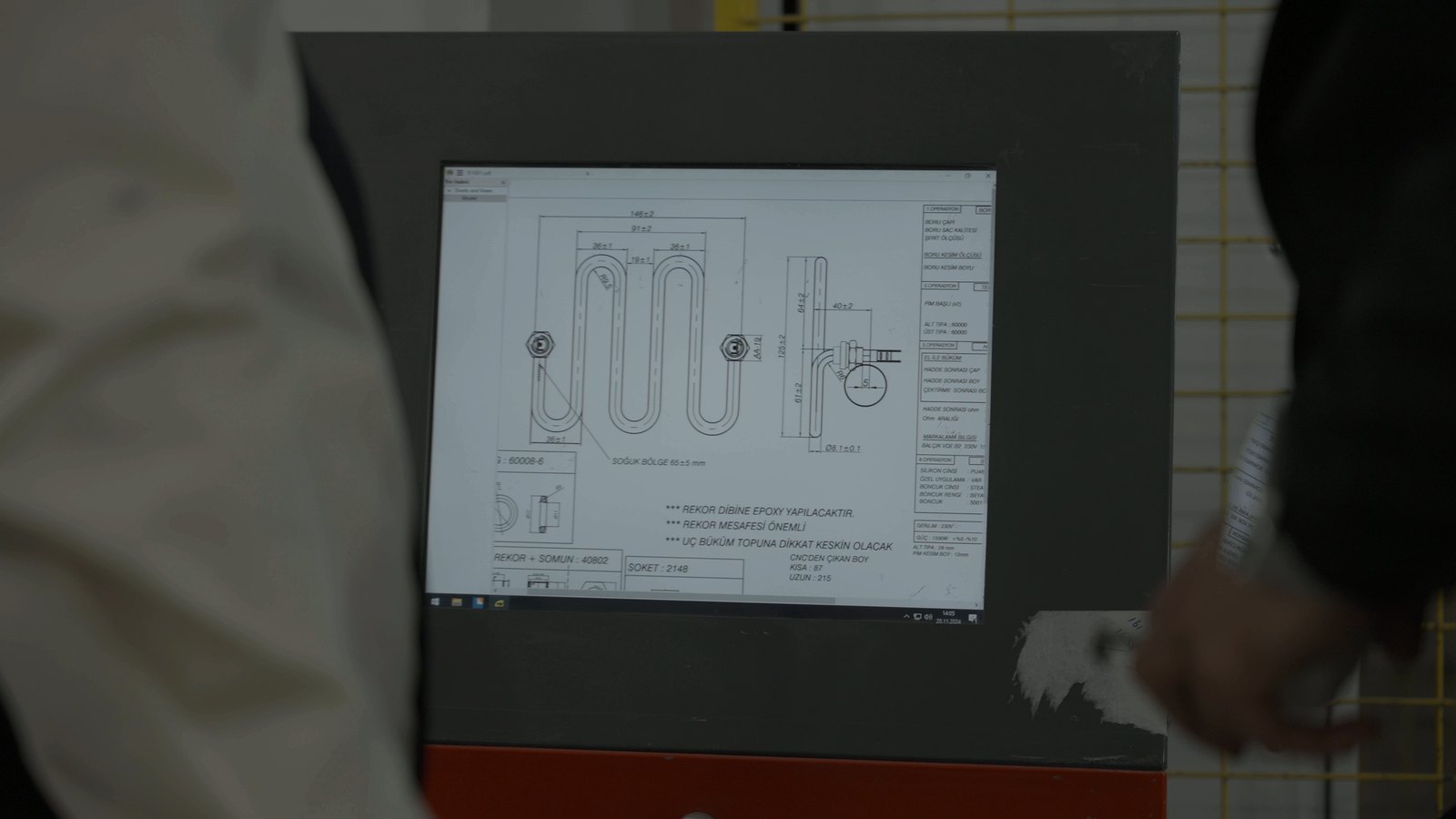
Most series elements are made to customer drawings; reference designs from series production are listed in our online product catalogue as a starting point. Values are typical of current European OEM practice and of our own production – individual designs can sit outside them when the application justifies it.
 Specifications
Ranges reflect current European OEM practice and Balçık series production as of 2026 and are indicative. Standards are cited for orientation; the applicable edition and any national deviations are determined during the approval of the finished appliance.
Group 1 · Radiant duty in air
Oven heating elements
Built-in, free-standing and mini/midi ovens use three element positions: a top (grill) element, usually a double circuit that doubles as the browning heater; a bottom element hidden under the cavity floor; and a ring element around the fan for convection models.
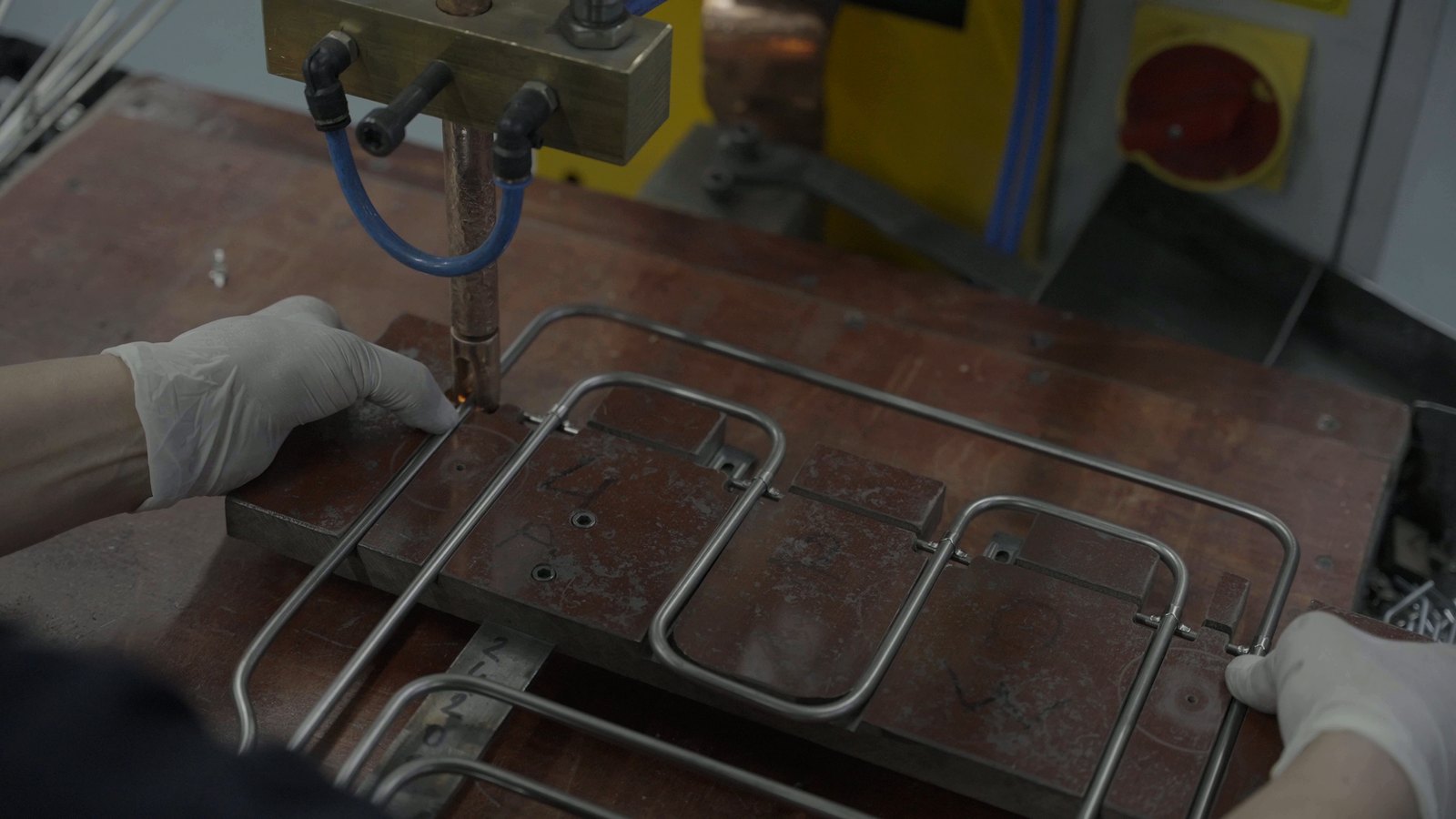
The grill runs bare at red heat (650–800 °C on the sheath), the bottom element and the fan-cooled ring run cooler, so sheath alloy, coil alloy and MgO grade are chosen per position, and dimensional accuracy matters because the element is fixed through the cavity back wall with welded brackets. Thermal cycling several thousand times over the appliance life is the main durability test.
| Parameter | Typical range |
|---|---|
| Sheath diameter | 6.5 – 8.5 mm (6.5 mm and 8.0 mm most common); 10 mm for heavy-duty bottom elements |
| Sheath materials | AISI 321, Incoloy 800; AISI 304 for lower-temperature bottom elements under a cavity floor |
| Power range | 600 – 3500 W per element; grill double circuits typically 1000 + 1500 W or 1200 + 1300 W |
| Voltage | 230 V single phase; 120 / 208 / 240 V for North American variants; 400 V between phases on some professional models |
| Watt density | 5 – 8 W/cm² (radiant duty); up to ≈ 10 W/cm² on fan-oven rings behind a cover |
| Terminal types | 6.3 mm flat tabs (nickel-plated), M4 studs, screw-on ceramic terminal sockets |
| Sealing options | PTFE/PFA bead, ceramic bead with high-temperature cement, STF seal for humid-cavity (steam) ovens |
| Typical appliance standards & marks | VDE / ENEC component approval to EN 60335-1, appliance to EN 60335-2-6; UL 858 / CSA for North America; CE, RoHS, REACH |
| Typical forms | Grill double-loop with centre web, bottom "U" or "M" serpentine, fan-oven circular ring (single or double), tangential and steam-generator elements |
Group 2 · Detergent, lint and hard water
Washing machine heating elements
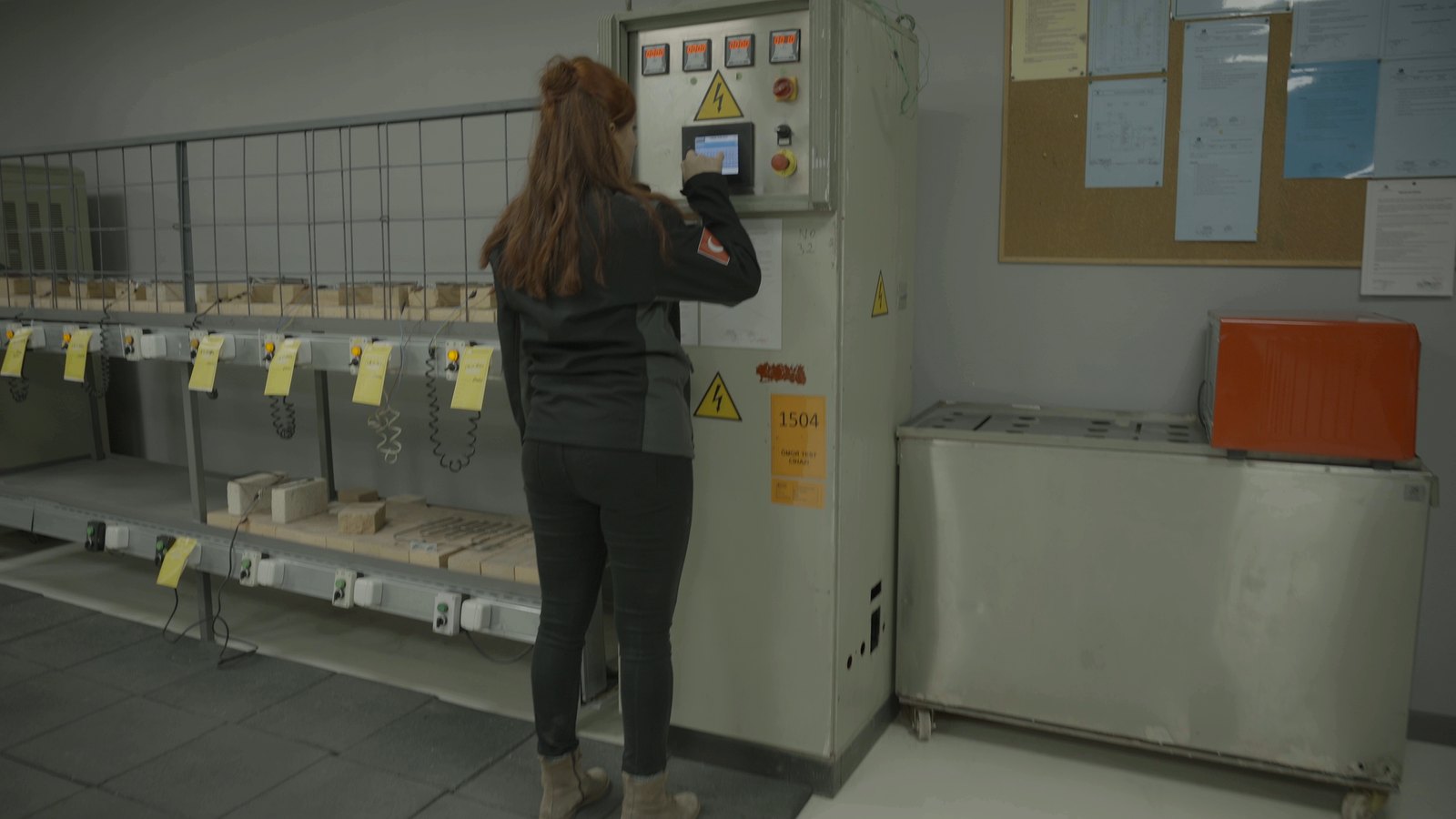
These elements heat detergent-laden water with suspended lint, in a tank that is periodically empty, in markets whose water hardness ranges from 2 to 40 °dH.
Washing-machine elements sit in the tub bottom through a rubber-gasketed shaped flange clamped by a single bolt and carry an NTC sensor and, increasingly, a thermal fuse (Thermofuse) against dry running. Chloride pitting and lime scale are the two failure modes that drive material choice.
| Parameter | Typical range |
|---|---|
| Sheath diameter | 8.0 – 8.5 mm |
| Sheath materials | AISI 304 nickel-diffusion coated, AISI 316L, Incoloy 825 for hard-water and premium ranges |
| Power range | 1700 – 2700 W at 230 V (typically 1800 – 2000 W) |
| Voltage | 230 V; 120 V and 208/240 V for North America |
| Watt density | 5 – 10 W/cm² on double hairpins; compact single hairpins run higher (hard water at the low end) |
| Terminal types | 6.3 mm flat tabs with locking lance; earth tab on flange; NTC with 2-pin connector |
| Sealing options | Silicone resin, epoxy resin, STF seal; Thermofuse: thermal fuse in the tube end |
| Typical appliance standards & marks | EN 60335-1 and EN 60335-2-7; VDE / ENEC marks; UL 2157 for North America; CE, RoHS, REACH |
| Typical forms | Double hairpin with shaped rubber flange, clamp bolt, NTC pocket and Thermofuse (single or double thermal fuse); single-hairpin and flat-loop variants |
Group 3 · Compact forms, high volumes
Small home appliance heating elements
Grills, toasters, contact grills, steam irons, kettles, coffee machines and air fryers share a need for small-diameter elements in tight spaces, often cast into or clamped to an aluminium plate, with high production volumes and short appliance lifetimes compared with white goods.
Cast-in elements (the sheath embedded in a die-cast aluminium soleplate or kettle base) can tolerate the highest surface loads because the aluminium spreads the heat; bare radiant elements in grills and toasters run like oven elements at smaller scale. Terminations are usually lead wires or small flat tabs chosen for automated assembly.
| Parameter | Typical range |
|---|---|
| Sheath diameter | 6.0 – 8.5 mm (6.5 mm most common); 10 mm for kettle and coffee-machine bases |
| Sheath materials | AISI 304, AISI 321 (radiant grills), Incoloy 800 (high-load radiant), copper (cast-in kettle bases) |
| Power range | 300 – 2600 W typical series (kettles 1800 – 2400 W, irons 1000 – 2600 W, grills 600 – 2200 W); other ratings to drawing |
| Voltage | 230 V; 120 V North America; 100 V Japan |
| Watt density | 3 – 9 W/cm² cast-in or clamped to aluminium; 5 – 8 W/cm² radiant; 8 – 12 W/cm² immersed kettle elements |
| Terminal types | Lead wires (silicone, PTFE or fibreglass insulated) with crimped ends; 4.8 and 6.3 mm flat tabs; M4 studs |
| Sealing options | Silicone resin, PTFE bead, ceramic bead for radiant grills |
| Typical appliance standards & marks | Appliance to EN 60335-2-9 (grills, toasters), 2-3 (irons), 2-15 (kettles and liquid heaters); VDE / ENEC, UL / cUL, CB scheme; CE, RoHS, REACH; food-contact declarations where the sheath touches water or food |
| Typical forms | Straight and "U" elements for cast-in soleplates, flat spirals and loops for grills and toasters, disc-base kettle elements, boiler elements for coffee machines |
Group 4 · Storage, instantaneous, industrial
Water heating elements
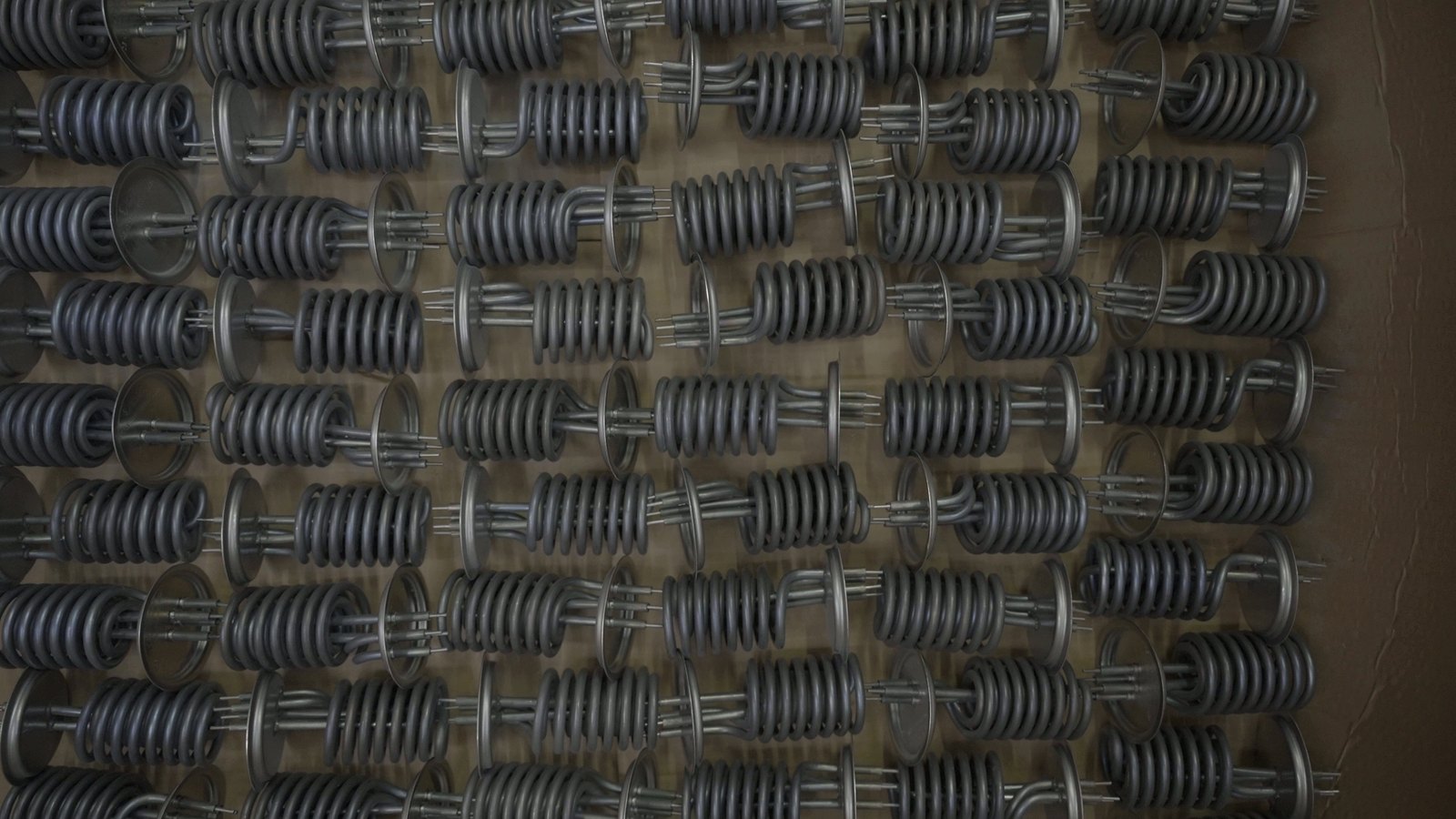
This group covers storage water heaters (flange and screw-in types), instantaneous water heaters, electric towel radiators, heat-pump back-up heaters and three-phase industrial immersion heaters.
The storage heater element is a mature design: two to four hairpins on a round flange or a threaded brass nipple, sized for low surface load to limit scale, usually paired with a stem thermostat in a pocket tube. Instantaneous heaters are the opposite case, with high surface load in fast-flowing water and a flow switch guarding against dry running. Water chemistry decides the sheath: copper and 304 for soft water, Incoloy 825 or nickel-diffusion coated sheaths for hard or aggressive water.
| Parameter | Typical range |
|---|---|
| Sheath diameter | 6.5 – 16 mm; 8.0 – 10 mm storage heaters, 6.5 – 8.5 mm instantaneous heaters, 12 – 16 mm industrial immersion heaters |
| Sheath materials | Copper (tinned or nickel-plated), AISI 304, AISI 316L, Incoloy 800, Incoloy 825, nickel-diffusion coated stainless; titanium on request |
| Power range | 800 – 3000 W storage heaters; 3 – 27 kW instantaneous heaters (multi-element); 300 – 1200 W towel radiators; 3 – 36 kW three-phase industrial |
| Voltage | 230 V single phase; 400 V three-phase star or delta; 120 / 240 V North America |
| Watt density | 6 – 12 W/cm² storage heaters (lower in hard water); 12 – 25 W/cm² instantaneous heaters; 8 – 15 W/cm² industrial immersion |
| Terminal types | M4 / M5 / M6 studs with nuts; 6.3 mm flat tabs; cable with plug for towel radiators; terminal box with cable gland for industrial |
| Sealing options | Epoxy resin, silicone resin, STF seal for high-humidity installations |
| Mounting | Round flanges Ø 48 – Ø 180 mm (steel, enamelled, stainless) with gasket; brass or stainless threaded nipples G ½″ – G 2″ (BSPP, ISO 228-1) or NPT; thermostat pocket tube |
| Typical appliance standards & marks | VDE / ENEC to EN 60335-1 and 2-21 (storage), 2-35 (instantaneous), 2-43 (towel radiators); drinking-water material approvals (e.g. WRAS, DVGW, ACS) per project; CE, RoHS, REACH |
| Typical forms | Flanged 2–4 hairpin immersion heaters, screw-in nipple heaters, tube-in-tube instantaneous heater cartridges, bare flow-heater coils, towel-radiator rods with integrated thermostat, three-phase flange heaters with terminal box |
Group 5 · Long duty cycles, food contact
Professional and industrial kitchen heating elements
Fryers, pasta cookers, bains-marie, combi ovens and steam generators, tea and coffee machines, hot-water boilers, vending machines and food distribution trolleys.
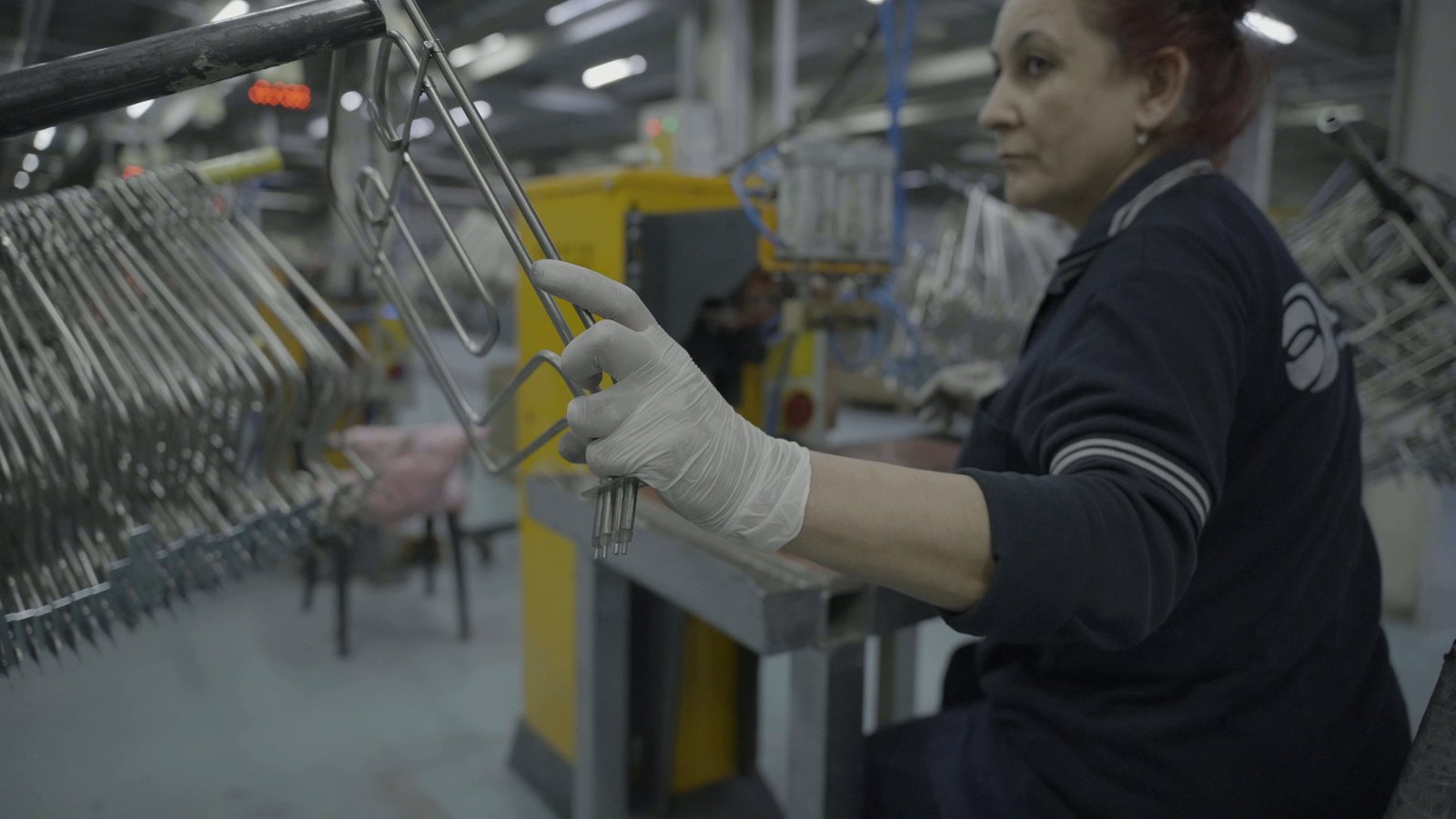
Duty cycles are far longer than in domestic appliances, sheaths are often in contact with food or frying oil, and cleaning chemicals are aggressive. Fryer elements are a specialised case: a large three-phase element lifted out for cleaning, with low surface load to avoid carbonising the oil and a design that leaves no pockets where food debris can bake on. Stainless fittings, PT100 sensors and welded (rather than brazed) joints are more common here than in the domestic groups.
| Parameter | Typical range |
|---|---|
| Sheath diameter | 8.0 – 16 mm; 8.5 mm bains-marie and boilers, 10 – 13.5 mm fryers, 12 – 16 mm steam generators |
| Sheath materials | AISI 304, AISI 316L, Incoloy 800 (fryers, dry-running steam generators), Incoloy 825 (hard-water boilers) |
| Power range | 1 – 6 kW single elements; fryer and steam-generator assemblies 6 – 24 kW three-phase |
| Voltage | 230 V; 400 V three-phase star or delta; 208 / 240 / 480 V North America |
| Watt density | 3 – 5 W/cm² frying oil; 8 – 12 W/cm² still water (boilers, bains-marie); 12 – 20 W/cm² flowing water (steam generators, flow heaters); 6 – 8 W/cm² food contact |
| Terminal types | M5 / M6 studs with stainless nuts; ceramic terminal blocks; 6.3 mm tabs on compact units |
| Sealing options | Epoxy or silicone resin, PTFE bead, STF seal for steam environments |
| Mounting | Stainless threaded nipples G ¾″ – G 2″, round and rectangular stainless flanges, welded brackets, lift-out fryer frames |
| Typical appliance standards & marks | EN 60335-2-37 (fryers), 2-50 (bains-marie), 2-42 / 2-36 (ovens and ranges), 2-75 (vending); ENEC, VDE, UL 197 / NSF for North America; CE, RoHS, REACH; food-contact materials declaration |
| Typical forms | Three-phase fryer baskets, bain-marie "U" and "W" loops, boiler flange heaters, steam-generator immersion heaters, tea/coffee boiler elements, tubular heaters for food holding cabinets |
Group 6 · Fitting and frame matter
Other industrial and professional appliance elements
Sauna heaters, HVAC and ventilation duct heaters, air curtains, drying cabinets, industrial washers and process tanks, packaging and sealing machines, and die-cast heater plates.
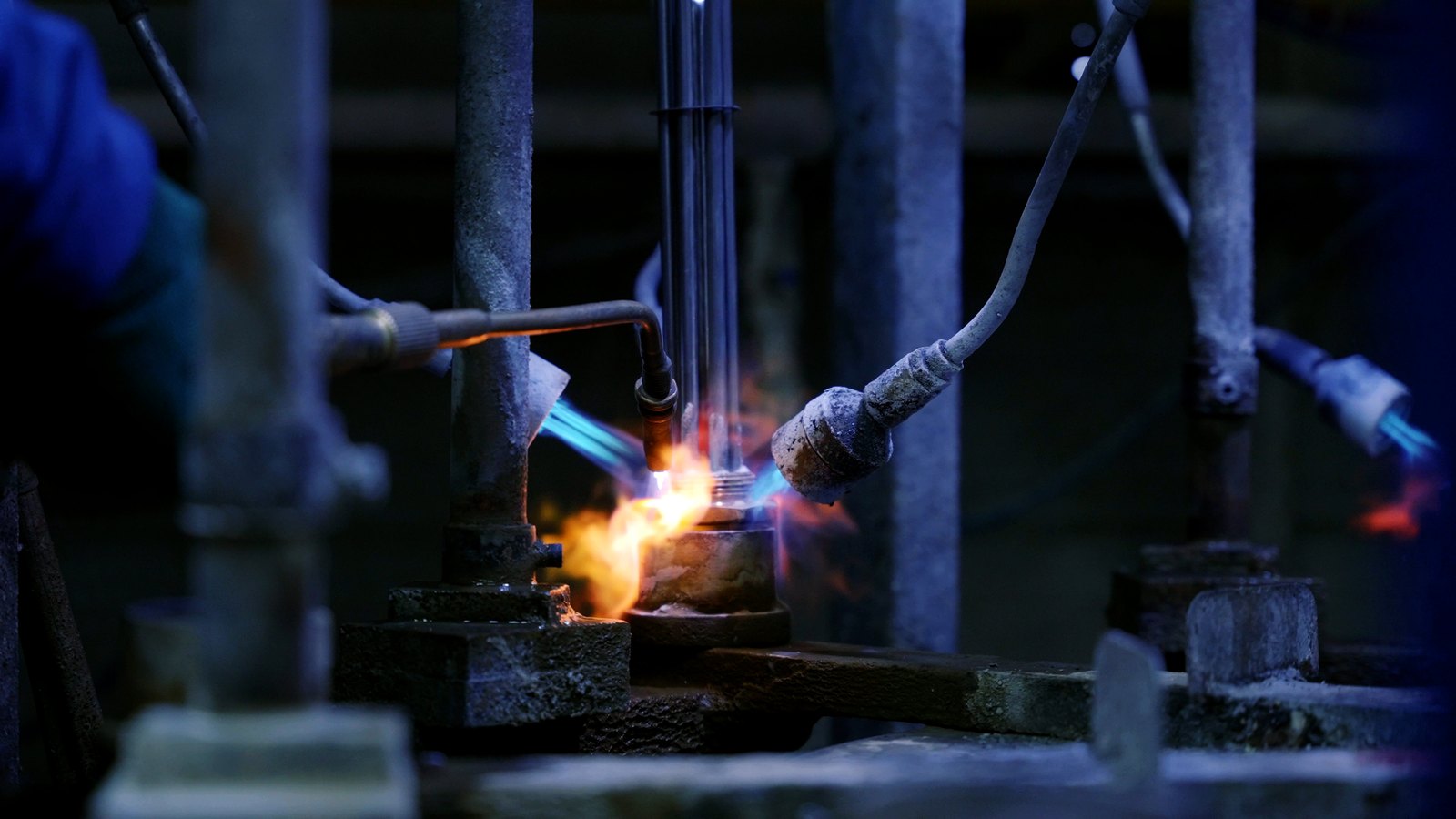
Sauna elements are the extreme of still-air duty: long straight or hairpin elements at 1500 – 3000 W each, running at visible red heat behind stones, where Incoloy 800 sheath and long cold zones through the heater floor are standard. Duct heaters combine plain or finned elements in frames with airflow interlocks. In this group the fitting and frame design is often as important as the element itself.
| Parameter | Typical range |
|---|---|
| Sheath diameter | 8.0 – 16 mm; 8.5 – 10 mm sauna and duct heaters, 12 – 16 mm process tanks |
| Sheath materials | AISI 304, AISI 321, Incoloy 800 (sauna, high-temperature air), AISI 316L (process liquids) |
| Power range | 500 – 3000 W per element (sauna typically 1500 – 3000 W); duct and process assemblies 3 – 60 kW |
| Voltage | 230 V; 400 V three-phase; 120 / 208 / 480 V North America |
| Watt density | 2 – 4 W/cm² still air (sauna at the upper end); 3 – 6 W/cm² forced air; 3 – 6 W/cm² clamped or cast-in metal contact; 8 – 15 W/cm² process water |
| Terminal types | M4 – M6 studs; ceramic terminal blocks; lead wires with fibreglass or silicone insulation; terminal boxes IP54 / IP65 |
| Sealing options | Ceramic bead and cement (sauna), epoxy or silicone resin, PTFE bead, STF seal |
| Mounting | Welded brackets and frames, threaded nipples, round flanges, flange plates for duct heaters |
| Typical appliance standards & marks | EN 60335-2-53 (sauna heaters), 2-30 (room heaters), 2-40 (heat pumps and air conditioners); EN 60519 / IEC 60519 for industrial electroheating; ENEC, VDE, UL 499; CE, RoHS, REACH |
| Typical forms | Straight and hairpin sauna rods, finned or plain duct-heater elements in frames, "U" and "W" process-tank immersion heaters, elements for cast-in plates, formed elements for packaging machines |
Group 7 · Specified by the metre
Finned, defrost and straight rod elements
Three element types that are specified by the metre rather than by appliance.
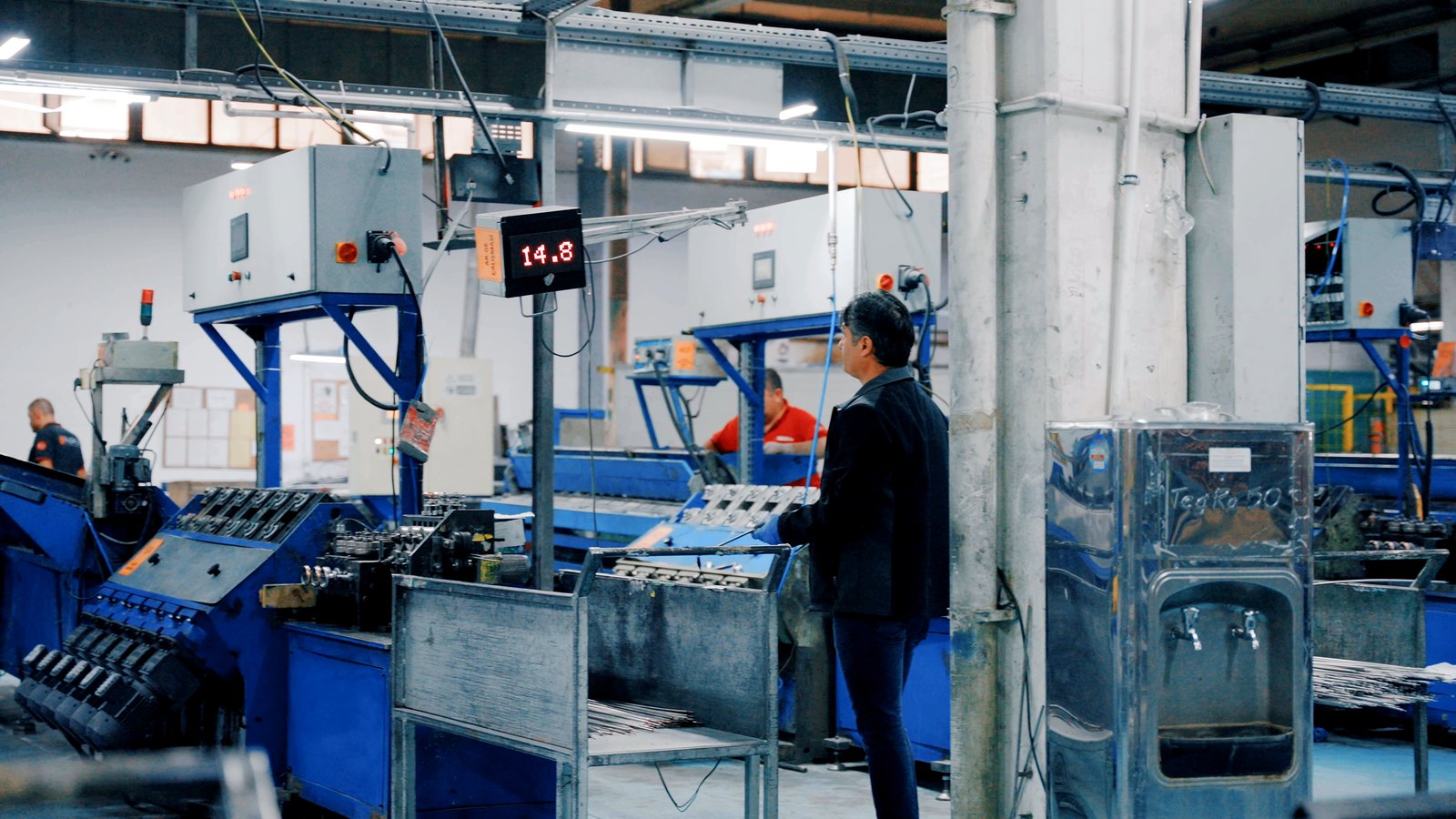
Finned elements carry a helically wound aluminium or stainless fin that multiplies the air-side surface, so a convector or dryer runs its sheath far cooler at the same power. Defrost heaters are low-load elements fitted to evaporators in refrigerators, freezers, cold rooms and heat pumps, often with a bare section through the drip tray. Straight rod elements are the basic building block for industrial heaters and are supplied in standard lengths for the customer's own assembly.
| Parameter | Typical range |
|---|---|
| Sheath diameter | 8.0 – 16 mm tube; fin outer diameter 25 – 45 mm (finned); 6.5 – 8.5 mm (defrost); 8.0 – 16 mm (straight rod) |
| Sheath materials | AISI 304, AISI 321, Incoloy 800; fins in aluminium, galvanised steel or stainless steel; defrost in AISI 304 or copper |
| Fin geometry (finned) | Helically wound fin, height ≈ 8 – 10 mm, pitch ≈ 4 – 6 mm, thickness 0.4 – 0.6 mm; max. sheath temperature ≈ 400 °C with steel fins, ≈ 650 °C with stainless fins |
| Power range | Finned 300 – 3000 W; defrost 100 – 800 W; straight rod 200 – 5000 W |
| Voltage | 115 / 230 / 400 V; low-voltage variants (12 – 48 V) for defrost on request |
| Watt density | Finned 2 – 4 W/cm² on the tube; defrost 1 – 3 W/cm²; straight rod per application medium |
| Terminal types | M4 / M5 studs, 6.3 mm tabs, lead wires with silicone or PTFE insulation and strain relief, plug connectors on defrost heaters |
| Sealing options | Silicone resin, epoxy resin (defrost, moisture-critical), PTFE bead, ceramic bead for high-temperature finned heaters |
| Typical appliance standards & marks | EN 60335-2-30 (room heaters), 2-24 (refrigerating appliances), 2-40 (heat pumps); UL 1030 / UL 499; CE, RoHS, REACH |
| Typical forms | Straight and "U" finned elements with mounting brackets, finned frame heaters, "U", "W" and serpentine defrost heaters with clips, straight rods in cut lengths with cold ends |
Group 8 · Tormec controls
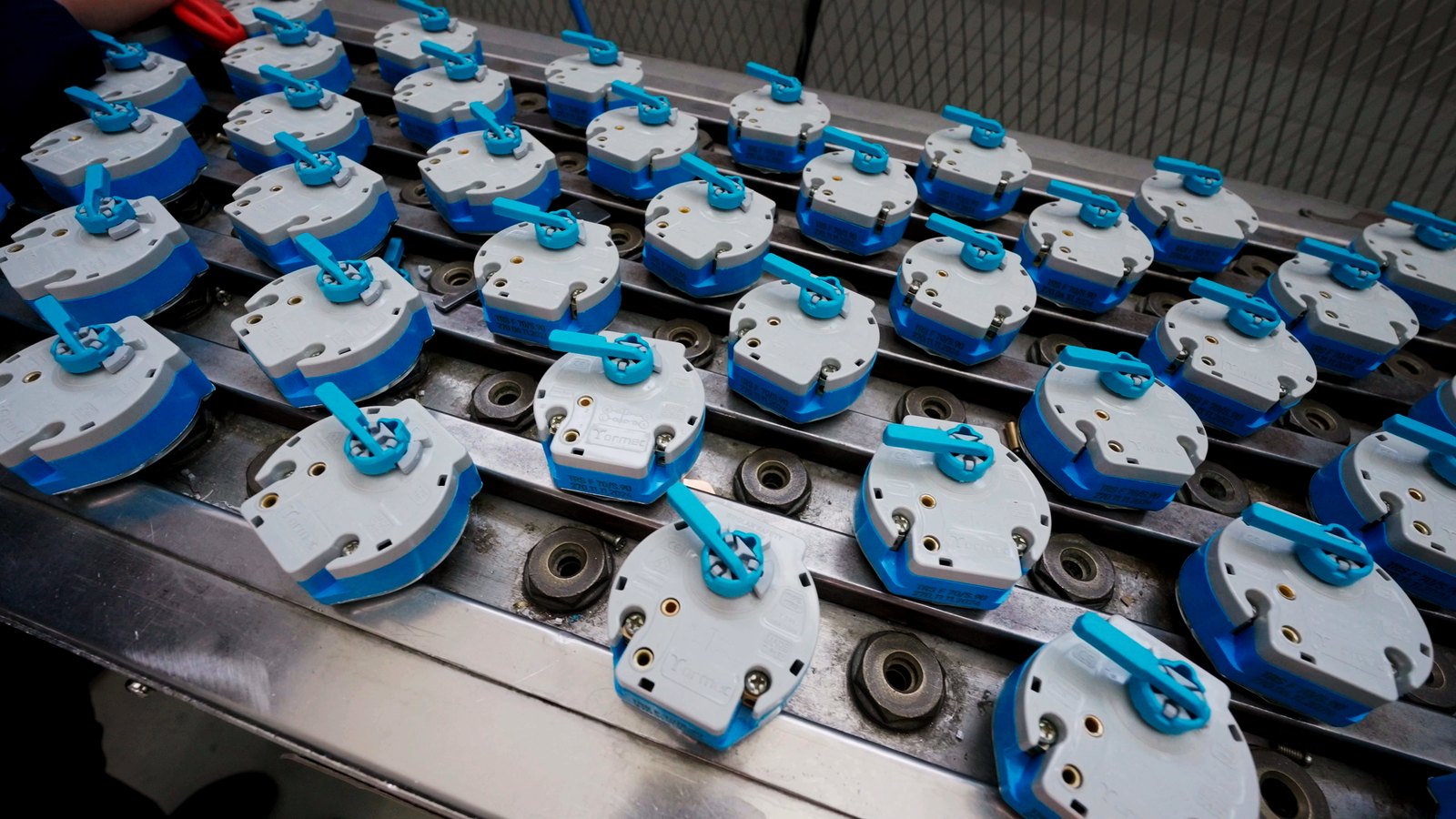
Stem-type thermostats (Tormec)
Stem thermostats control storage water heaters, boilers and some industrial tanks by inserting a long rigid sensing stem into a pocket tube alongside the element.
The stem's thermal expansion acts on a snap-action switch, giving a direct-switching, electronics-free control that is tolerant of the humidity and temperature inside a water-heater terminal cover. Most models combine an adjustable regulating contact with a separate, non-adjustable safety cut-out that opens on over-temperature; two-pole and three-phase versions switch all live conductors. Tormec stem thermostats are designed and manufactured by Balçık and are supplied either separately or fitted to our water-heater elements.
| Parameter | Typical range |
|---|---|
| Stem diameter and length | Ø 6 – 8 mm stem; stem lengths 150 – 450 mm typical (e.g. 270, 300, 350, 450 mm) |
| Materials | Stem: copper or stainless steel; housing: thermoset or thermoplastic insulating body; contacts: silver alloy |
| Regulating range | Adjustable, typically 20 – 80 °C (hot water); fixed or adjustable to 90 °C on request |
| Safety cut-out | Fixed, typically 85 – 110 °C; manual reset (non-self-resetting) for storage water heaters, automatic reset only where the appliance standard allows it |
| Switching capacity | 16 A / 20 A at 250 V AC single-pole; 16 A / 400 V three-pole versions for 3-phase heaters |
| Voltage | 230 V single phase; 400 V three phase |
| Terminal types | 6.3 mm flat tabs, screw terminals, M4 studs; earth connection via mounting bracket |
| Mounting | Bracket clamped to element flange, pocket tube Ø 8 – 10 mm; adjusting knob or screwdriver setting |
| Typical appliance standards & marks | EN 60730-1 and EN 60730-2-9 (automatic electrical controls, temperature sensing controls); VDE / ENEC, UL 873 (per project); CE, RoHS, REACH |
| Typical forms | Single-pole regulating thermostat, regulating + safety cut-out combination, two-pole and three-pole versions |
Electronic stem thermostats: the hybrid model documented in the 2016 brochure is not in current sales; the brochure stays available as an archive edition on the catalogues page.
Outside the envelope? That is where co-design starts.
Send your drawing or specification. Our engineers check it against these ranges and confirm feasibility, materials and surface load before quoting.