Step 1
Electroless deposition
Nickel is deposited chemically, without external current – so the layer grows evenly, with no build-up on edges.


Since 1959
Tel. +90 312 814 51 20
WhatsApp +90 533 619 95 45
Email: t@tormec.com.tr
BALÇIK Isı Elemanları Sanayi Ticaret A.Ş.
Fatih Mh. Turgut Özal Blv. No:50
Kahramankazan 06980 Ankara Türkiye
A diffused nickel surface on the stainless sheath – against corrosion and scale in hard and detergent-bearing water.
Nickel diffusion coating
Hard, chloride- or detergent-bearing water attacks an uncoated stainless sheath and builds scale on it. In nickel diffusion coating, an electroless nickel layer is deposited on the stainless-steel sheath and diffused into the surface by heat treatment, giving an adherent, nickel-rich surface that resists corrosion.
Layer thickness: typically 10 – 15 µm, measured on samples from every batch with our coating-thickness gauge; a specific thickness is agreed on the drawing.
For washing-machine and water-heater elements in hard water it is a lower-cost option to an Incoloy 825 sheath. The coating is applied by our division Balçık Brazing.
 Washing machines
How it is made
The layer is built up chemically and then bonded into the sheath by heat – it does not sit on the surface like a plated skin.
Step 1
Nickel is deposited chemically, without external current – so the layer grows evenly, with no build-up on edges.
Step 2
Heat diffuses the nickel into the stainless surface: the layer is bonded to the base metal and stays adherent in service.
What it protects against
In hot wash water and hard tap water, chlorides attack an uncoated 304 sheath, and lime builds up on the hottest surface in the appliance – the element.
A dense, nickel-rich surface protects the sheath against chloride pitting and detergent attack.
Lower scale adhesion on the sheath. A moderate surface load remains the first defence against lime.
Only the surface changes: geometry, coil, terminals and fittings of the element stay as they are.
Where it is used
Both groups list the coated sheath next to higher alloys on our Specifications page. The values below are taken from there.
Washing machines
Water heating
| Sheath option | What changes | Typical choice for |
|---|---|---|
| AISI 304, uncoated | Base austenitic stainless grade | Clean or softened water |
| AISI 316L | Bulk alloy with molybdenum for better pitting resistance | Tap water with chlorides, detergent solutions |
| Stainless, nickel-diffusion coated | Diffused surface layer; the alloy stays the same | Hard or aggressive water in washing machines and water heaters, at lower cost than Incoloy 825 |
| Incoloy 825 | Bulk nickel–iron–chromium alloy with molybdenum and copper | Aggressive, brackish or acidic water, where the whole tube – bends and brazed joints included – must resist the medium |
Temperature limits and corrosion notes for each grade are in the sheath material table of our design guide.
Test evidence
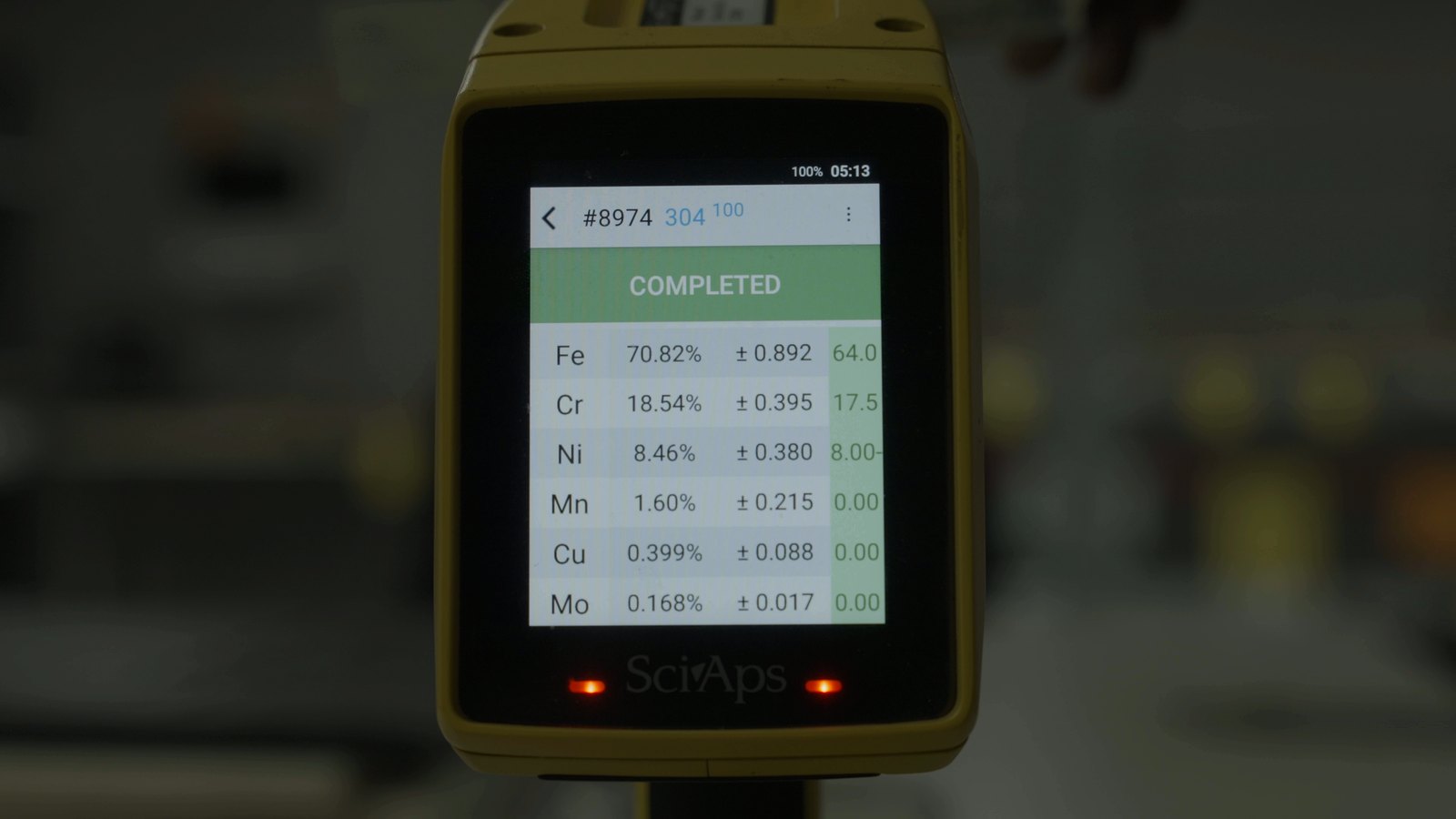
Corrosion depends on water chemistry, temperature and surface load, so we do not quote a single corrosion rate. The coating is verified on samples and tested under the conditions you specify.
Results are reported per project, for the medium and conditions agreed with you.
Related
Tell us the water hardness, the detergent and the duty cycle. We propose the sheath – coated, AISI 316L or Incoloy 825 – and the surface load to match.
Engineered and made in Ankara · since 1959
Three generations of know-how, our own welded tube and brazing lines, an engineering team with its validation laboratory and a 100 % electrical test on every element – so the heat inside your product is the one thing you never have to worry about.
Nickel diffusion coating protects stainless heating element sheaths against corrosion and scale in washing machines and water heaters: process, uses, tests.
BALÇIK TORMEC designs and manufactures tubular heating elements in Kahramankazan, Ankara, since 1959 – series and custom production to your drawing, VDE-approved element families, ISO 9001:2015, exports to more than 60 countries.
Reception & switchboard
Human resources
Worldwide sales
Customers outside Türkiye – English, Russian, Arabic
Domestic sales – Türkiye
For customers in Türkiye · Türkçe
Purchasing & imports
Accounting
Quality
We use essential cookies to run the site and, with your consent, functional cookies for embedded maps and anonymous usage statistics (Google Analytics). No advertising or profiling cookies are used. See our Cookie Policy and KVKK / privacy notices.
Sitenin çalışması için zorunlu çerezleri; onayınızla gömülü harita için işlevsel çerezleri ve anonim kullanım istatistiklerini (Google Analytics) kullanıyoruz. Reklam veya profilleme çerezi kullanılmaz. Çerez Politikası ve KVKK aydınlatma metinleri.